Hispanic Heritage Month: Traditions That Keep Families United in the United States
Por Miriam Gonzalez ·
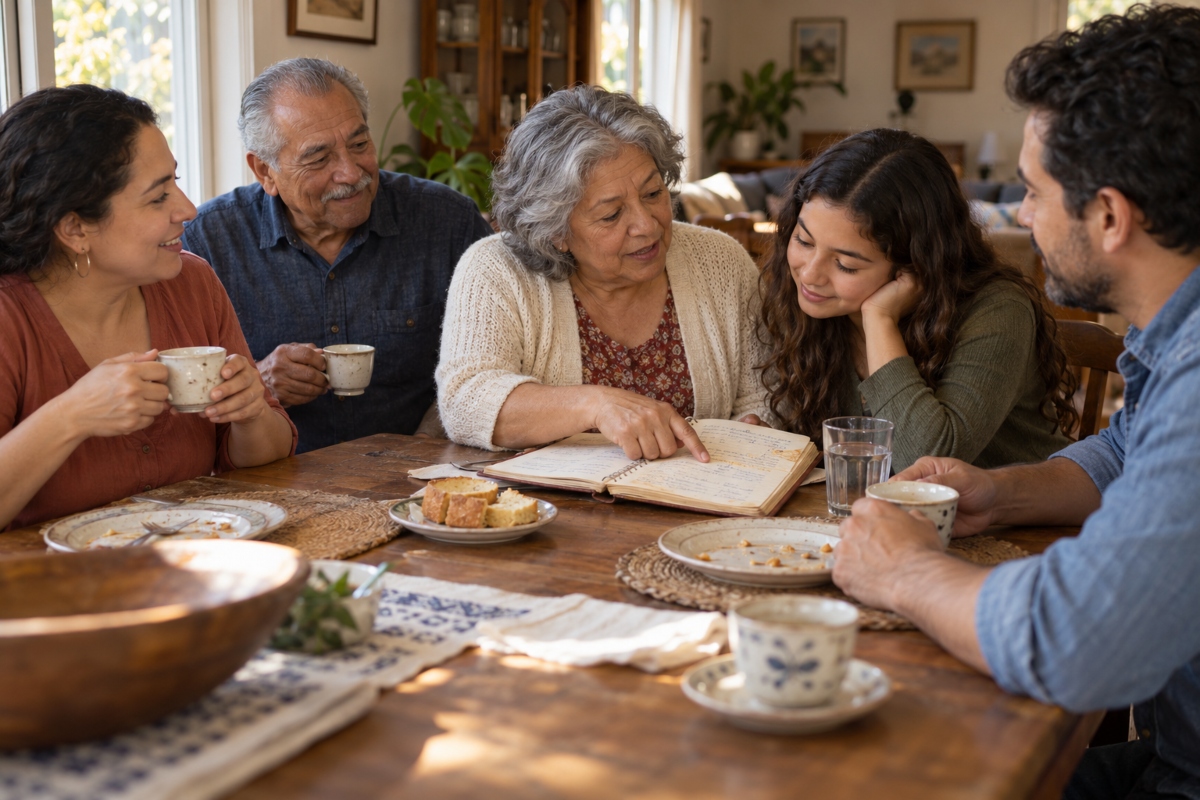
«Will you stay for coffee?». An everyday question can become an invitation to share stories, remember someone, or extend a visit. Latin family traditions also live in those moments: around a table, while preparing a recipe or when someone explains how things were cooked in their home.
During Hispanic Heritage Month, these customs offer a close way to explore our roots. Not all families share the same rituals, and many are not exclusive to the Latino community either. Their meaning lies in who transmits them, how they are practiced, and what memories they awaken.
The Library of Congress explains that food traditions encompass recipes, their transmission between generations, and the relationship of shared meals with practices like storytelling. Heritage can be found in the dish itself as well as in the conversation that accompanies it.
The little coffee as an invitation to stay
Sharing coffee can create a pause among family, friends, or colleagues, according to KitchenAid US.
In the tradition of Cuban coffee, for example, the colada is served with small cups to distribute it: a presentation designed for sharing.
In each home, the invitation can take another form.
Perhaps it’s coffee with milk, hot chocolate, or simply sitting together.
To reclaim that moment, you can suggest a brief visit without needing to organize a celebration: prepare something they enjoy and ask about a family story.
Lingering at the table: when conversation continues
Lingering at the table is the time spent at the table after eating.
It can include coffee, memories, or a conversation that stretches on while the dishes wait, according to WordReference.com.
If you want to make room for it at home, a simple proposal is to reserve a few minutes after finishing a shared meal.
Questions like «what did you eat when you were a child?» or «who used to prepare this dish?» can open conversations about places, people, and experiences that younger ones don’t yet know.
There’s no need to make it a daily obligation. A weekend meal can be enough to begin.
Latin family traditions that move from the kitchen to memory
A family recipe can contain much more than ingredients.
The Library of Congress brings together materials about indigenous and Afro-descendant communities in Latin America in which culinary practices appear interwoven with childhood memories, conversations, and family stories.
To document a recipe from your home, ask about the quantities, but also about its history: who taught it, what occasions it was prepared for, and what adjustments it has had.
With the person’s permission, you can record their explanation or write it in a notebook.
Also note the instructions that usually stay out of a formal recipe, such as the texture a dough should reach.
That information can help whoever wants to prepare it later.
Customs also change in the United States
Preserving a tradition allows for adaptations.
The National Museum of American History documents how, alongside traditional Mexican preparations, new dishes emerged that combined Mexican influences, regional American influences, and those from other Latin cultures.
In a family, an adaptation can become part of their own history.
When keeping a recipe, record both the version that elders remember and the one they currently prepare, without presenting one as the only valid version.
Sharing the task of preserving memories
You can invite different family members to cook, ask questions, write, or take photographs.
A small shared file can bring together recipes, images, and notes about the people who passed them down.
To start, choose just one custom: prepare a dish together, stay to chat after eating, or invite someone for a little coffee.
The next gathering can be an opportunity to ask about that family story you still haven’t heard.
Filed as: Latin family traditions