Do Vaccines Cause Autism? Dr. Sanjay Gupta Explains What the Science Really Says
Por Miriam Gonzalez ·
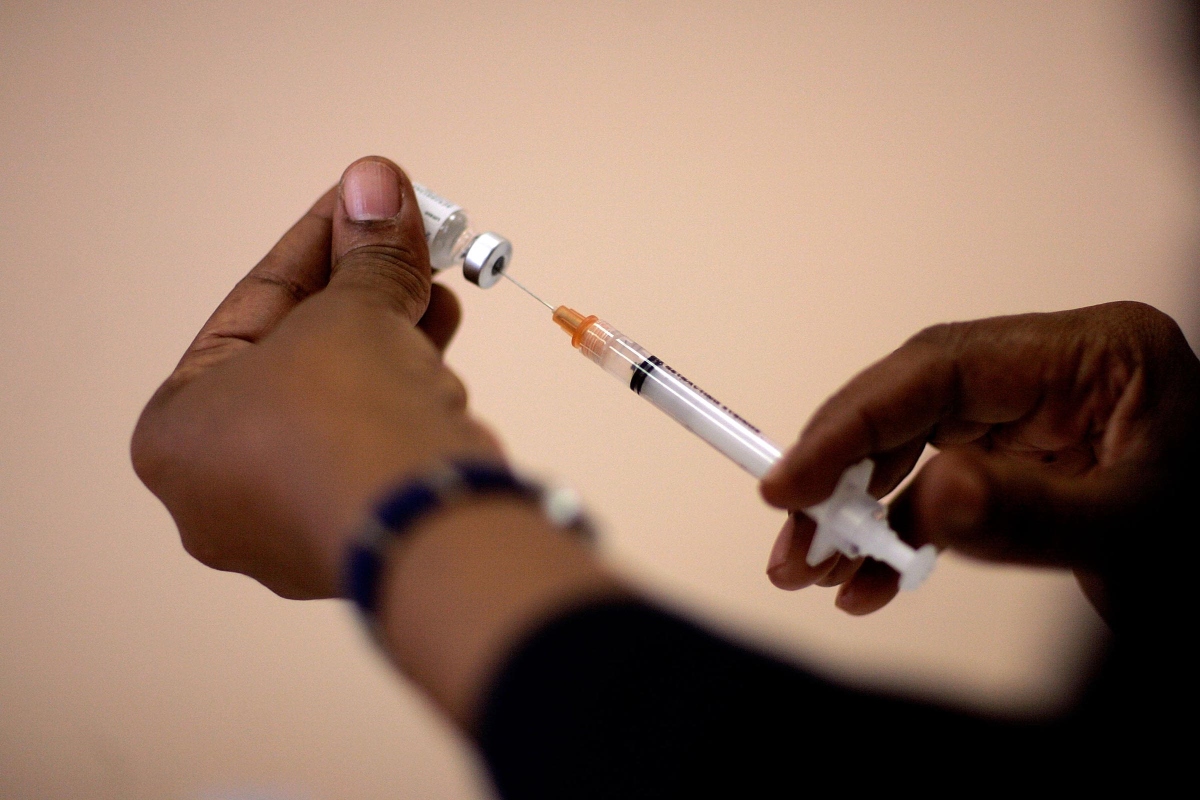
Can vaccines cause autism? Although this question continues to generate concern among some parents, available scientific research has found no evidence of a causal relationship between vaccination and autism development.
Dr. Sanjay Gupta, CNN’s chief medical correspondent, revisited this debate in an updated essay on November 17, 2026, in which he argues that the benefits of vaccines should not be treated as a simple matter of opinions.
The text, originally published in 2015, reminds us that vaccines have transformed modern medicine by preventing diseases that previously caused numerous deaths.
Gupta also addresses one of the main difficulties in prevention: when a vaccine works, the disease it prevents often goes unnoticed.
Vaccines and autism: What do scientific studies say?
US loses measles elimination status after nearly three decades
#Measles | #MeaslesElimination | #Vaccination | #USHealth | #InfectiousDiseases | #GlobalHealth
Read more: https://t.co/dzA9zuCmG7
— ETHealthWorld (@ETHealthWorld) November 18, 2026
One of the physician’s central arguments is that claims about vaccines should be evaluated through research and not solely based on individual experiences.
To illustrate this point, Gupta cites a meta-analysis published in 2014 that compiled information from approximately 1.2 million children.
The researchers found no association between vaccination and autism.
The study examined data related to different vaccines and components that had raised concerns among some sectors of the population.
Its results supported the conclusion that the childhood vaccines studied were not linked to an increased risk of developing autism.
This finding is important because it allows for the analysis of large amounts of information, rather than relying on isolated cases that do not necessarily demonstrate a cause-and-effect relationship.
Can vaccines cause serious side effects?
Various Research studies concluded that #Vaccination to heathy children causing #Autism , #ADHA , Diabetis type-I & Cancer and Ors NERVE diseases.
#CDC of US Vaccine safty page altered and stated that the claim «Vaccine do not cause autism » is not evidence based and updated in November 2025.
US govt also withdrew the order of compulsory Vaccination to newly born babies in #USA .
ALTERNATIVE MEDICINE WITH INTEGRATIVE APPROACH CURES above diseases.
Pls call +919212366845
https://t.co/Y3U4XVUM8w
@TIMEHealth
@bbchealth
@PTI_News— Shre Centre for Integrative Medicine (@centre_medicine) November 18, 2026
Gupta acknowledges that, as with other medical products, vaccines can produce side effects.
However, he points out that it is necessary to distinguish between common reactions and serious adverse events, which are much less frequent.
In his essay, the physician mentions that a severe allergic reaction after certain vaccines can occur in approximately one case per million doses.
The exact frequency depends on the vaccine and the type of reaction studied.
The specialist uses this information to explain why an exceptional event can generate considerable concern, especially when it receives widespread public attention.
He also compares the perception of vaccine risk with that of commonly used medications, such as aspirin and acetaminophen, which can cause serious complications under certain circumstances.
His argument is that any medical intervention must be evaluated considering both its possible risks and the benefits it offers.
Why do some people continue to distrust vaccines?
5 Important Things Parents Should Know About Vaccination!
👶 Follow the vaccine schedule.
✅ Don’t miss recommended doses.
📋 Maintain vaccination records.
🩺 Consult your pediatrician.
📞 0120-2320260/61 | 9711960840
#Vaccination #ChildHealth #Immunization #GreenCityHospitals https://t.co/2EXHZw8kSr— Green City Hospital (@gchgrnoida) November 18, 2026
According to Gupta, one of the main difficulties in communicating the benefits of vaccination is that prevented diseases are not always visible to those receiving vaccines.
When a person does not contract measles, mumps, or rubella thanks to immunization, there is generally no event that draws attention.
Instead, a rare adverse reaction can become widely publicized news.
This difference can influence the way some families perceive risks.
The physician also considers that personal beliefs can carry more weight than scientific data in conversations about vaccination.
That is why he insists on the importance of consulting medical evidence and understanding how vaccine safety and efficacy are investigated.
The measles vaccine and the importance of preventing disease
Measles is resurging in the Americas. @DirOPSPAHO has issued a serious warning about the alarming rise in #measles cases across the Region.
This global and regional resurgence is a wake-up call about persistent gaps in #vaccination coverage. https://t.co/CB7zremhRN
— PAHO/WHO (@pahowho) November 18, 2026
Measles is one of the examples Gupta uses to explain the value of vaccination.
The physician reminds us that the vaccine against this disease is available, although there are communities where immunization coverage is insufficient.
During his experience as a medical correspondent, Gupta visited regions affected by health emergencies and observed situations in which people wished they had access to vaccines that were not yet available.
Among those experiences, he mentions his coverage of the Ebola outbreak in West Africa.
The contrast, as he explains, shows that access to vaccines represents a prevention opportunity that does not always exist in all regions of the world.
In the case of measles, vaccination also helps protect people who cannot receive certain vaccines for medical reasons.
Maintaining high coverage helps reduce the chances of transmission within communities.
Why can vaccination also protect other people?
United States Loses Measles Elimination Status After 26 Years as Cases Pass 5,000 in 2026
https://t.co/k4aby00365#cdc #diseaseelimination #measles #paho #peterhotez #publichealth #unitedstateshealth #vaccination https://t.co/gGlxNCQNdg
— QNC News (@qnc_news) November 14, 2026
In the final part of his essay, Gupta shares a personal reflection on the decision to vaccinate his children.
The physician rejects the idea that concern for child health is exclusive to those who question vaccines.
For him, the decision to immunize his children was related both to their individual protection and to the responsibility of contributing to the well-being of other families.
Vaccination can reduce the circulation of certain infectious diseases and, depending on the vaccine, decrease the risk of infection, serious complications, or transmission.
This is especially relevant for infants, people with certain medical conditions, and other vulnerable groups.
Although medical decisions must consider each person’s particular circumstances, Gupta argues that scientific evidence must occupy a central place in any conversation about vaccination.
His main message is that vaccines are not risk-free, but their proven benefits have made it possible to prevent diseases and save lives.
In the face of doubts about their safety, the recommendation is to consult with health professionals and review reliable scientific information before making decisions about immunization for children and adults.
Filed as: Vaccines and autism