Record Number of Unvaccinated Kindergarteners as Trump Seeks to Change the Rules
Por Miriam Gonzalez ·
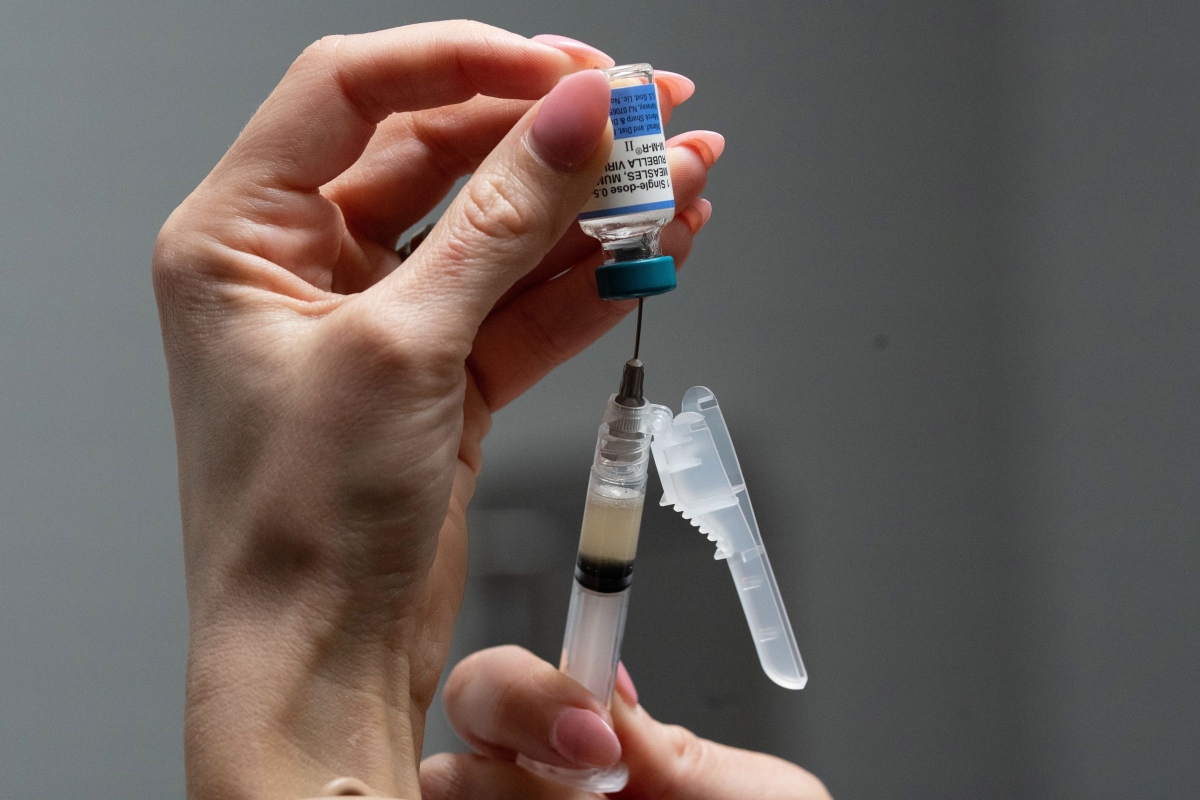
A record percentage of children who started kindergarten in the United States during the 2025–2026 school year had an exemption for at least one of the vaccines required by their state, a trend that takes on special significance after President Donald Trump signed an executive order seeking to change the federal government’s approach to childhood vaccination.
New data from the Centers for Disease Control and Prevention (CDC) show that 4.2% of kindergarten students had an exemption from at least one required vaccine during the last school year, resulting in a record number of unvaccinated children in the United States.
The figure is the highest on record and is double the rate observed a decade ago.
In absolute terms, approximately 157,000 children who started school did not have full coverage for at least one vaccine required by their state—about 20,000 more than during the previous school year.
Most of the exemptions were not medical
in nature
The data show a significant difference between the reasons given for requesting exemptions.
Only 0.2% were due to medical reasons, a proportion that has remained relatively stable for years.
Exemptions increased in all but nine states, and according to the CDC, nearly half of the states reported rates above 5%.
Currently, all 50 states have laws requiring certain vaccinations for school attendance, and all provide for medical exemptions.
However, most also allow for some type of non-medical exemption, which may be based on religious or personal grounds.
According to the National Conference of State Legislatures, California, Connecticut, Maine, and New York are the only four states that do not allow exemptions for non-medical reasons.
New York eliminated religious exemptions in 2019 after measles outbreaks in the state reached levels not seen in the United States for decades.
Trump Seeks to Expand Parents’ Options
Controversy in the United States: Trump Reduces the Number of Recommended Childhood Vaccines pic.twitter.com/wexvIKZCf3
— Noticias Cuatro (@noticias_cuatro) August 11, 2026
The new situation coincides with the executive order signed by Trump, which includes recommendations aimed at providing parents with “more information and options” regarding their children’s vaccinations.
The measure emphasizes the goal of “maximizing parents’ choices regarding vaccinations for their children” and specifically states that states should provide religious and medical exemptions.
However, the presidential order does not automatically change state laws.
The authority to establish and enforce school vaccination requirements remains with the states.
The Trump administration has indicated that it will seek to have state governments align their policies with the new federal guidelines.
According to CNN, the Departments of Justice, Education, and Health and Human Services received instructions regarding linking compliance with those policies to federal funding.
It is not yet clear how that mechanism would be implemented.
Texas says its requirements remain unchanged
Several states continue to review the executive order, and some have already made it clear that their current regulations remain in effect.
“The federal recommendations do not change the requirements in Texas,” the state health department told CNN.
Maine also stated that, so far, its school and child care policies remain unchanged.
Any changes to state laws regarding exemptions would have to be approved by the respective state legislatures, many of which will not reconvene until January.
The courts may also step in.
Mississippi began allowing religious exemptions in 2023 following a federal court order, while efforts to allow them in West Virginia are facing legal challenges.
Measles vaccination rate remains below 95%
Trump: “Effective immediately, my administration recognizes the ‘Gold Standard’ childhood vaccination recommendations for only 11 core vaccines against the most serious and dangerous diseases, along with the MMR vaccine for infants, instead of the current 72. Trump said it clearly: pic.twitter.com/tLLyVOYfbD
— James Nava (@JamesNavaCom) August 11, 2026
Data from the CDC show that MMR vaccine coverage—against measles, mumps, and rubella—among kindergarten students declined slightly during the last school year.
It went from 92.5% to 92.4%.
Although the year-over-year change is small, vaccination coverage remains below the 95% threshold considered necessary to achieve herd immunity against measles and help prevent outbreaks.
The news comes at a particularly sensitive time: Measles cases in the United States reached their highest level in 35 years this year, according to CNN, and the vast majority have been reported among people who were not vaccinated with the MMR vaccine.
Dr. William Moss, an associate professor at the Johns Hopkins Bloomberg School of Public Health, has warned about the consequences of an increase in exemptions.
“If more and more parents decide not to vaccinate their children for non-medical reasons, we will undoubtedly see an increase in disease outbreaks,” he said.
The order proposes separating the MMR vaccine
The executive order also recommends that the MMR combination vaccine be administered as three separate injections.
CNN notes that this change contradicts the broad scientific consensus and could raise new concerns among families.
Historically, states have used the recommendations of the CDC and its Advisory Committee on Immunization Practices (ACIP) as a guide for establishing their policies.
But that relationship has begun to change.
The ACIP has undergone significant changes under Secretary of Health and Human Services Robert F. Kennedy Jr., as federal authorities have pushed for a review of the childhood vaccination schedule, including a reduction in the number of diseases covered by routine immunizations.
28 states are deviating from federal recommendations
In the absence of new CDC guidelines for COVID-19 and RSV, the American Academy of Pediatrics and the American Academy of Family Physicians released their own recommendations for fall vaccinations. pic.twitter.com/2THpcJKouG
— Asi Veo Las Cosas (@_asiveolascosas) September 3, 2026
According to KFF, 28 states have announced that they will no longer follow federal vaccine recommendations.
Most have indicated that they will use the recommendations of the American Academy of Pediatrics, an independent medical association, as a guide.
The Governors Public Health Alliance, a coalition that includes more than a dozen governors representing approximately one-third of the U.S. population, criticized the executive order.
The organization argued that for decades, the U.S. childhood vaccination schedule had been developed through a scientific process designed to evaluate the safety and effectiveness of vaccines.
He also warned that changing that process could cause confusion among families.
A debate that is now moving to the states
Although federal policy on childhood vaccinations is undergoing significant changes, families should not assume that school requirements have been eliminated.
For now, state laws continue to determine which vaccines a child needs to attend school and what types of exemptions are available.
What the new data does show is a trend that was already underway: more families are taking advantage of existing exemptions.
With 4.2% of kindergarten students exempt from at least one required vaccine and MMR coverage below the level recommended to prevent outbreaks, the debate over childhood vaccination is entering a new phase in the United States.
The next steps will depend largely on state legislatures, courts, and health authorities as the federal government seeks to implement its new policy.
Filed under: Unvaccinated Children in the United States
Source: CNN Newsource