Sweet Nostalgia: The Surprising Stories of Seven Halloween Favorites
Por Miriam Gonzalez ·
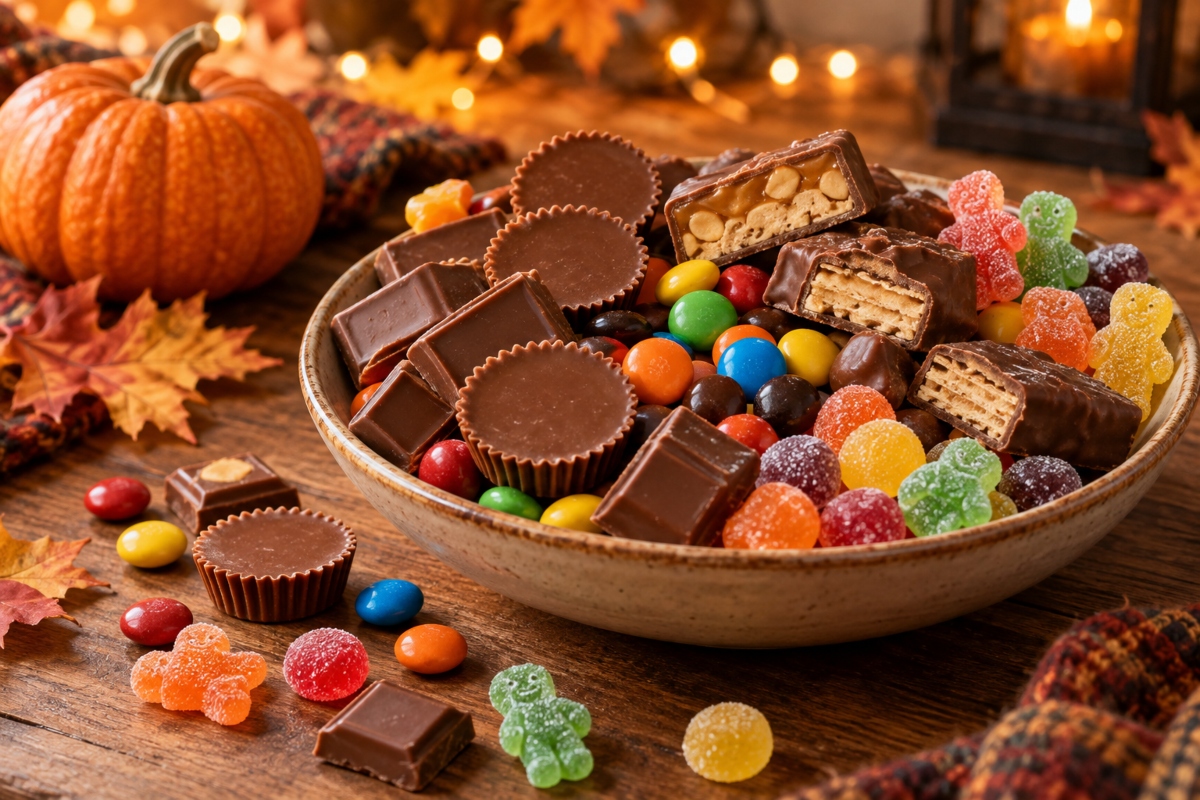
Popular Halloween candies hold stories that go far beyond sugar. Some have been on store shelves for over a century; others found their place in movies, commercials, and even theatrical productions. Opening a bag can become a small journey through American pop culture.
Nostalgia also appears in purchases. In a report published in September 2026, DoorDash noted that Reese’s Peanut Butter Cups led its Halloween candy orders, followed by Hershey’s Milk Chocolate and M&M’s.
There is no single list that measures all the country’s preferences: results change depending on the platform, the period, and whether orders, weight, or sales are counted. This selection brings together seven favorites and the stories that help explain their permanence.
Reese’s: A Family of Candies with an Extraterrestrial Connection
Hershey adds disclaimer to Reese’s Peanut Butter Pumpkins https://t.co/Xq5Bh7PuvC https://t.co/ZQi9m2hu6y
— Boston 25 News (@boston25) October 7, 2026
H. B. Reese created Peanut Butter Cups in 1928.
His combination of chocolate and peanut butter became the foundation of a brand that later expanded its products.
But there is a confusion worth clearing up: the candy that appeared in E.T., from 1982, was Reese’s Pieces, not the chocolate cups.
Hershey Community Archives documents that the collaboration with Universal drove demand for the product.
The connection to cinema belongs to that specific variety.
Hershey’s: The Chocolate That Sought to Reach More People
Chocolate or Cookies N Cream? https://t.co/4czVWx6o8A
— We Love Food (@_we_love_food) October 11, 2026
The first Hershey’s Milk Chocolate bars were sold in 1900.
Its history began with years of experimentation by Milton Hershey to produce milk chocolate at an affordable price.
The company’s archives explain that large-scale manufacturing was central to that project.
Before becoming one of the usual Halloween names, the bar represented a transformation in how chocolate was produced and sold in the United States.
M&M’s: Color Also Tells a Story
Dale al RT si tú también caerías en la trampa.😱 Hay 20 packs de M&M’s en juego para pasar un Halloween 🎃 terroríficamente delicioso. Sin trucos ni tratos #HalloweenConMms👻👽 https://t.co/DLyylk8IPV
— M&M’s España (@mms_es) October 24, 2018
Among popular Halloween candies are M&M’s, which have existed since 1941, according to Mars.
Its visual identity ended up being as important as the chocolate: small pieces, different colors, and a letter that allows them to be recognized.
In 1995, the arrival of blue M&M had a particularly visible presentation: the Empire State Building illuminated its facade with that color.
The history shows how a change in a candy bag can become a publicity event.
Snickers: A Name Born from a Horse
🍫🎃 Reese’s Peanut Butter Cups are leading America’s Halloween candy race, according to a new report. But with chocolate classics and fruity favorites competing for attention, which treat deserves the crown? https://t.co/JBPU9i0Nqp
— Veloce Pulse 🇺🇸 (@VelocePulse) October 13, 2026
Snickers was launched in 1930 and named after one of the Mars family’s favorite horses, according to the official brand history.
Decades later, the campaign known in Spanish as «You’re not you when you’re hungry» gave the bar a new personality.
Its advertising turned an everyday situation into a recognizable idea, keeping a product much older than its commercials relevant.
Kit Kat: A Break That Crossed Generations
This is Halloween Candy in Canada.
Coffee Crisp
Smarties
Areo
Kit-Kat
What will you be giving out to the trick or treaters https://t.co/22zOuxMFUh— Mr Bench (@therealmrbench) October 31, 2025
Kit Kat was born in England in 1935 as Chocolate Crisp.
Its name changed afterward, but the association with taking a break ended up defining its advertising presence.
The message «Have a break, have a KitKat» accompanied its international expansion.
In its 2025 retrospective, Nestlé also highlighted flavor adaptations and collaborations with entertainment and sports.
The brand preserved the idea of the break while seeking new ways to communicate it.
Skittles: When an Advertisement Became Theater
The price of Skittles jumped ⬆️42% from last year. Not to mention the cartels are stuffing Skittles bags with deadly fentanyl.
Happy Halloween from the Biden administration. https://t.co/6gUwPKKhB0
— Heritage Foundation (@Heritage) October 22, 2022
The story of Skittles includes an unconventional gamble.
In 2019, the brand announced a musical for Super Bowl Sunday instead of a traditional television commercial.
The production was presented in New York and brought advertising to the stage.
That experiment extended its identity beyond colored candies: it turned the promotion of a treat itself into entertainment.
Sour Patch Kids: From Cinema to the Halloween Bag
Halloween with Sour Patch Kids!🎃👯
New Sour Patch Kids snacks in-stores now!
🛒Spotted at Walmart, Five Below and other major stores.
(News/Image::Sour Patch Kids)
Feeling any of these👇🏻 https://t.co/ccUicQCH98
— Markie Devo (@markie_devo) August 29, 2026
Sour Patch Kids was introduced in 1985.
Mondelēz attributes part of its growth to its presence in American movie theaters.
Its flavor, which shifts from sour to sweet, and its characters built an identity distinct from chocolate bars.
For those who associate them with a movie, finding them on Halloween can also bring back a memory of another outing and another moment.
Each of these candies has its own journey.
Together they show how flavors, names, and advertising mix with the memories that a family can share during the season.
Archived as: Popular Halloween Candies