Pink October: What to Expect and How to Prepare for Your First Mammogram
Por Miriam Gonzalez ·
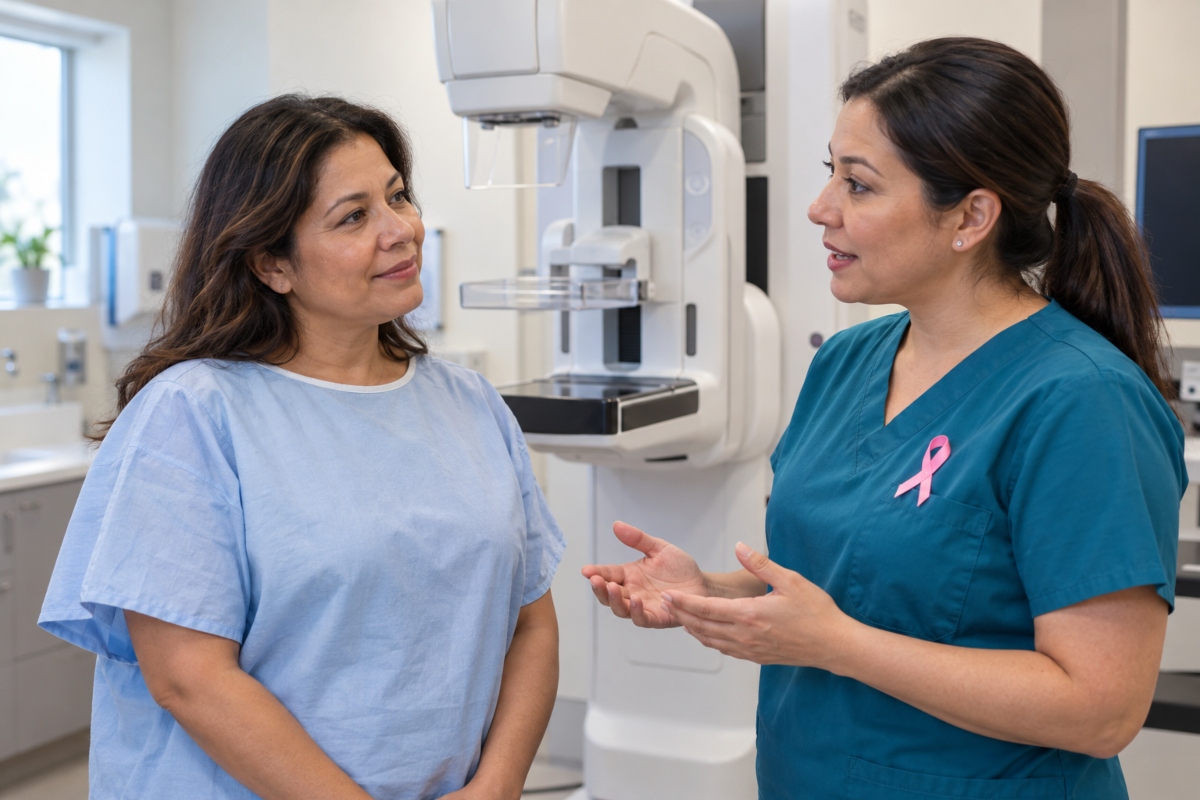
Preparing for your first mammogram can raise questions: does it hurt?, should I fast?, what happens if they find something? Knowing the procedure allows you to arrive informed and express your concerns, without requiring all your nerves to disappear before the appointment.
A mammogram obtains images of the breasts using low-dose X-rays. It can detect changes before they are palpable, although, like any screening test, it has limitations. Its purpose is to look for signals that need evaluation, not to assume you have cancer. [FDA]
First confirm what type of study you need
A screening mammogram is performed when there are no symptoms.
A diagnostic one evaluates a change, a discomfort, or a previous finding and may require additional images.
If you notice a lump, nipple discharge, or changes in the breast, communicate this to your medical team when requesting the appointment.
Do not wait for your routine check-up to mention it.
In the United States, the USPSTF recommends mammograms every two years between ages 40 and 74 for women at average risk.
Other organizations use different schedules, and personal or family history can modify the plan.
Agree with your healthcare provider when to start and how often to repeat it, according to the recommendation of the Centers for Disease Control and Prevention.
How to prepare without complications
To prepare for your first mammogram you do not need to fast: you can eat and drink normally.
If you have other procedures that day, confirm their instructions separately.
Wear a blouse with pants or a skirt, because you will need to remove your clothing from the waist up.
Avoid applying deodorant, antiperspirant, creams, perfume, or powder on your breasts and underarms: some products interfere with the images.
If you menstruate and your breasts are usually sensitive before your period, try to choose a time of less sensitivity.
This preference should not delay the evaluation of a symptom.
Bring identification, insurance information, and any previous breast studies you have, such as ultrasounds or biopsies.
Let them know if you have implants, are breastfeeding, could be pregnant, or need assistance positioning yourself in front of the equipment, according to the National Breast Cancer Foundation.
What happens during the mammogram
You will be given privacy to change and a gown or covering.
The radiology staff will place each breast on a platform and lower a plate to compress it while taking images.
Each compression usually lasts between 10 and 15 seconds.
The American Cancer Society indicates that the complete screening procedure takes approximately 20 minutes, although your time at the center may be longer.
The pressure can be uncomfortable and, for some people, painful.
Tell them at that moment so the staff can try to adjust the compression.
You can also ask them to explain each step before doing it, according to the American Cancer Society.
A follow-up call does not automatically mean cancer
Sometimes additional images are requested to clarify a finding.
That call does not by itself confirm a diagnosis, but it does require completing the recommended follow-up.
Before leaving, ask when and how you will receive your results.
If you do not hear back within 10 days, the American Cancer Society advises contacting the center or your healthcare provider, rather than assuming everything came back normal.
If the report mentions dense breasts, ask what that means in your case.
The FDA explains that density can make detection harder and increase risk; additional studies are evaluated based on your history and results.
Questions you can write down
Will my study be screening or diagnostic?
What can I do if the compression hurts?
When will I receive the report and who will explain it to me?
How does my breast density affect this?
When should I have another mammogram?
You can also ask if you need a medical order, what your insurance covers, and if there is interpretation in Spanish.
These are valid questions: participating in the conversation is part of preparing yourself and taking care of your health.
Filed as: Preparing for your first mammogram