La Catrina and Its Meaning: The Social Critique Behind the Day of the Dead Symbol
Por Miriam Gonzalez ·
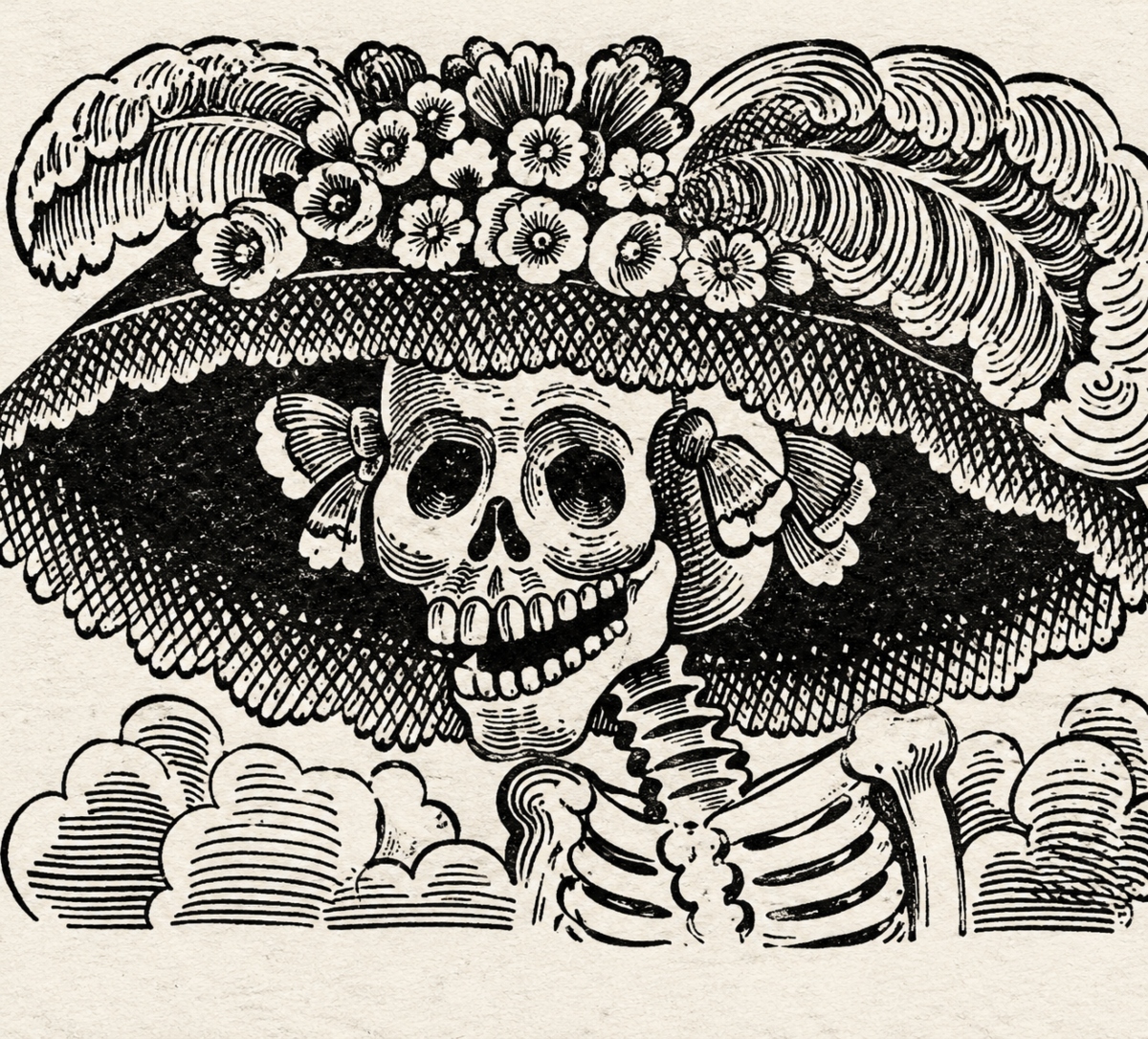
With her feathered hat and otherworldly elegance, La Catrina seems made to lead the Day of the Dead. But the meaning of La Catrina also has an uncomfortable root: criticism of appearances and those who sought prestige by imitating European fashions.
Before becoming makeup, a handcrafted figure, and the protagonist of celebrations, she was a printed skull. Her history unites the satire of José Guadalupe Posada with the muralism of Diego Rivera and helps explain why her image says much more than «death.»
La Catrina’s Meaning Begins with Social Critique
The antecedent of this character is the Garbancera Skull by José Guadalupe Posada.
In the engraving, a skull wears an ostentatious hat: the contrast between the bones and the accessory concentrates the mockery.
The National Institute of Anthropology and History explains that the image satirized vanity.
For its part, Fonart relates the term «garbancera» to people who pretended to adopt a European identity and renounced their indigenous roots.
The hat, therefore, had a critical intention.
It represented an aspiration for distinction that became absurd when placed on a skull.
Appearance could be shown off; the mortal condition remained there.
Diego Rivera Gave Her the Elegant Body We Recognize
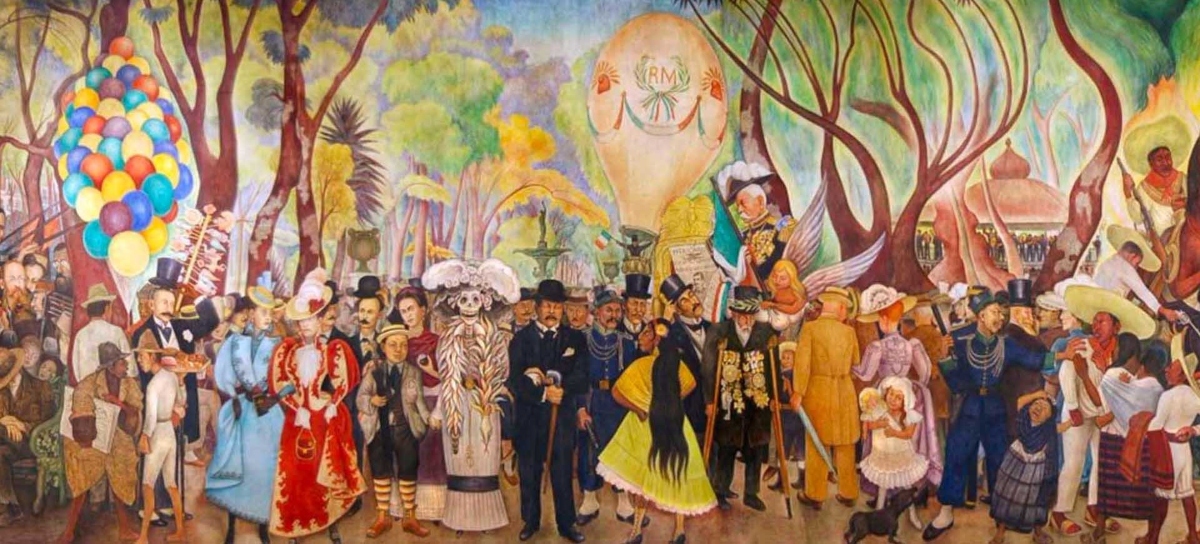
In 1947, Diego Rivera revisited the figure in Dream of a Sunday Afternoon in Alameda Central.
According to the National Institute of Fine Arts and Literature, the mural presented her in full body and consolidated the image of La Catrina that we know today.
The change was decisive: the skull with a hat acquired a formally dressed presence within a work that traverses different moments in Mexico’s history.
For this reason, when discussing her origins, it is worth recognizing both contributions: Posada created the satirical image that served as the precedent, and Rivera developed its celebrated full-body representation.
What Her Elegance Represents Before Death
La Catrina es un ícono de la cultura mexicana, representativa del #DíaDeMuertos, pero… ¿Sabes cómo surgió?
¡Te explicamos! 💀🍁 https://t.co/O5g62mqDVu
— Día De Muertos (@diademuertos_) October 22, 2026
The Smithsonian American Art Museum explains that Posada’s satirical skulls reminded people that, in the end, we all share the same fate.
Money, social position, and clothing do not eliminate that equality.
From that perspective, La Catrina’s elegance functions as irony.
Her luxury draws attention, but her skeleton disarms any pretense of superiority.
That mixture of humor and reflection helps explain her visual power: it allows us to speak of death through a recognizable, theatrical figure loaded with social commentary.
Her Place in Day of the Dead and in the United States
💀✨ «Aquí la Catrina, reportándose desde el más allá…» 🎙️🇲🇽
Entre flores de cempasúchil, velas encendidas y risas que cruzan fronteras, te invito a celebrar una de las tradiciones más vivas de México: el Día de Muertos. 🌼🕯️
Porque aunque mi trabajo es recibir a las almas, hoy las veo regresar para abrazar a quienes las recuerdan. 💛
La muerte no nos separa… nos une en una fiesta de color, memoria y amor eterno. 🌙
Acompáñame a recorrer esta tradición que solo en México se vive así. 😉
— SECTUR México (@SECTUR_mx) November 1, 2025
La Catrina became incorporated into a celebration whose central meaning is remembering those who have died.
The UNESCO describes indigenous festivities dedicated to the dead as a commemoration of the temporary return of family members and loved ones, accompanied by offerings, flowers, and food.
Her image is an expression within that diversity.
She does not by herself summarize all the family, community, and religious practices of Day of the Dead.
In the United States, the Smithsonian links the expansion of public celebrations to Chicano artists and activists who, since the 1970s, have used art, altars, and processions to assert their identity.
For those celebrating far from Mexico, knowing this history offers another way to approach the character: appreciating her beauty and recognizing the social critique, memory, and cultural transformations she carries with her.
Filed as: Meaning of La Catrina