How to Make a Family Offering with Memories, Letters, and Photographs
Por Miriam Gonzalez ·
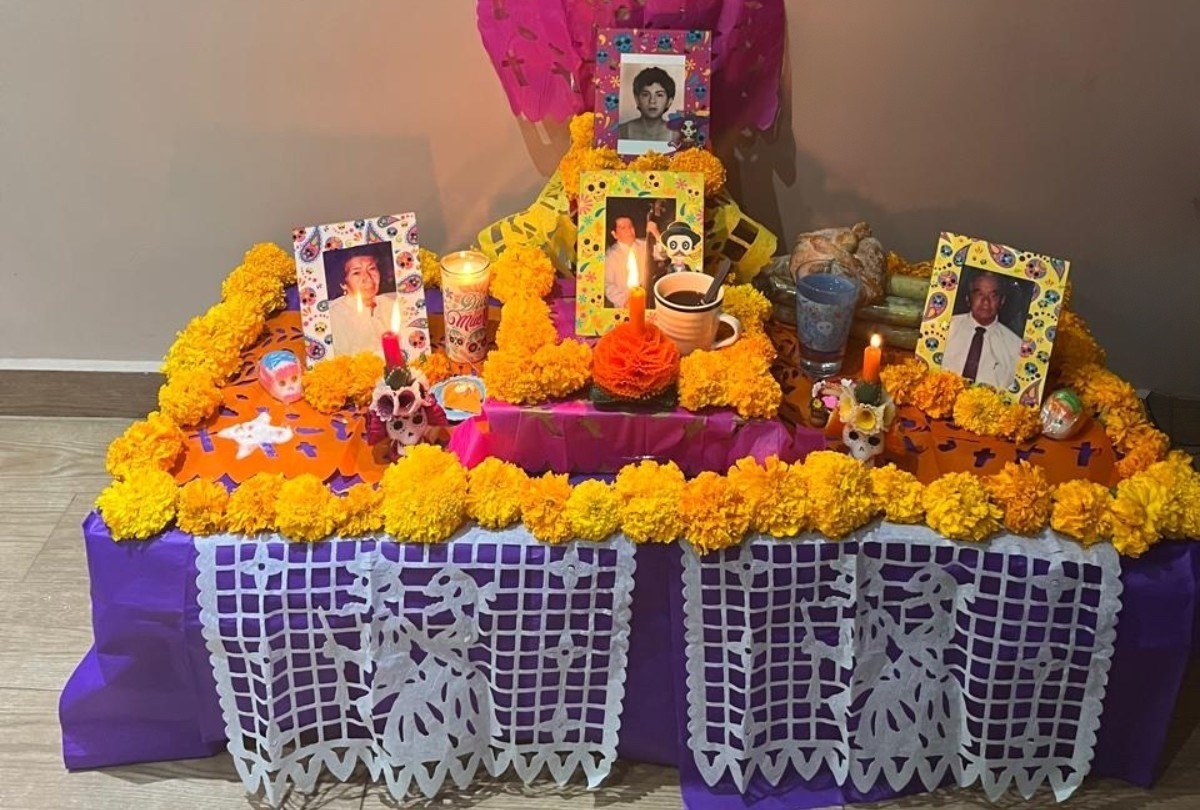
A photograph of grandmother preparing food, a letter saved for years, or the handkerchief that dad always carried can be the starting point for remembering as a family. If you’re looking for how to make an offering, begin by gathering the stories and objects that give meaning to that tribute.
The Smithsonian National Museum of the American Latino explains that Day of the Dead offerings include photographs of deceased loved ones, along with flowers and food. Its resources also show how music and videos can be part of a digital tribute.
For families living in the United States who preserve memories in Mexico or other countries, preparing this space can begin with a phone call: asking for a photo, inquiring about a song, or recovering a story that the children don’t yet know.
How to Make an Offering That Tells a Story
Choose a sturdy surface and a place where people can come close to observe the memories.
It can be a small table or a cleared piece of furniture.
Decide who it will be dedicated to.
If you will remember several people, you can group their photographs with the corresponding objects so that each story is recognizable.
On that base, arrange the elements your family is accustomed to: flowers, water, food, papel picado, or religious symbols.
Letters and drawings are a proposal to personalize the tribute; they don’t need to become a new obligation.
Photographs That Invite Questions
Select images that allow for conversation: a birthday, a family gathering, a portrait from youth, or an everyday scene.
Place a card next to the frame with the person’s name and some information you want to share.
It’s better to write the information there and keep the photograph intact.
If the original image has sentimental value, use a copy.
The Library of Congress recommends considering copies to display valuable photographs and maintain originals in proper conservation conditions.
Letters to Say What We Want to Remember
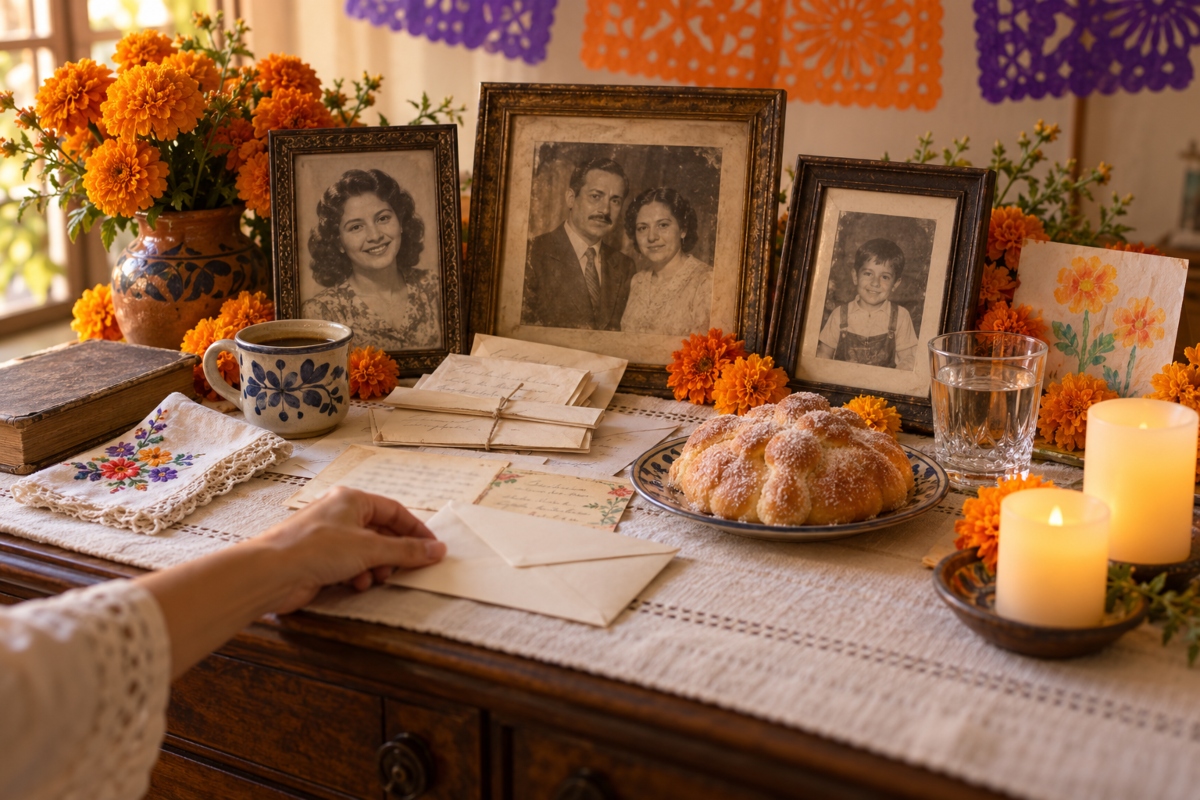
Invite each member to write a few lines.
They can start with phrases like «I always remember when…» or «Thank you for teaching me…».
There’s no need to write a farewell or share something intimate in front of everyone.
Some people may prefer to leave their letter folded inside an envelope; others may want to read an anecdote.
Children can draw an activity they shared with that person or dictate a message to an adult.
Participating can also mean listening while someone else tells a story.
Small Objects with Meaning
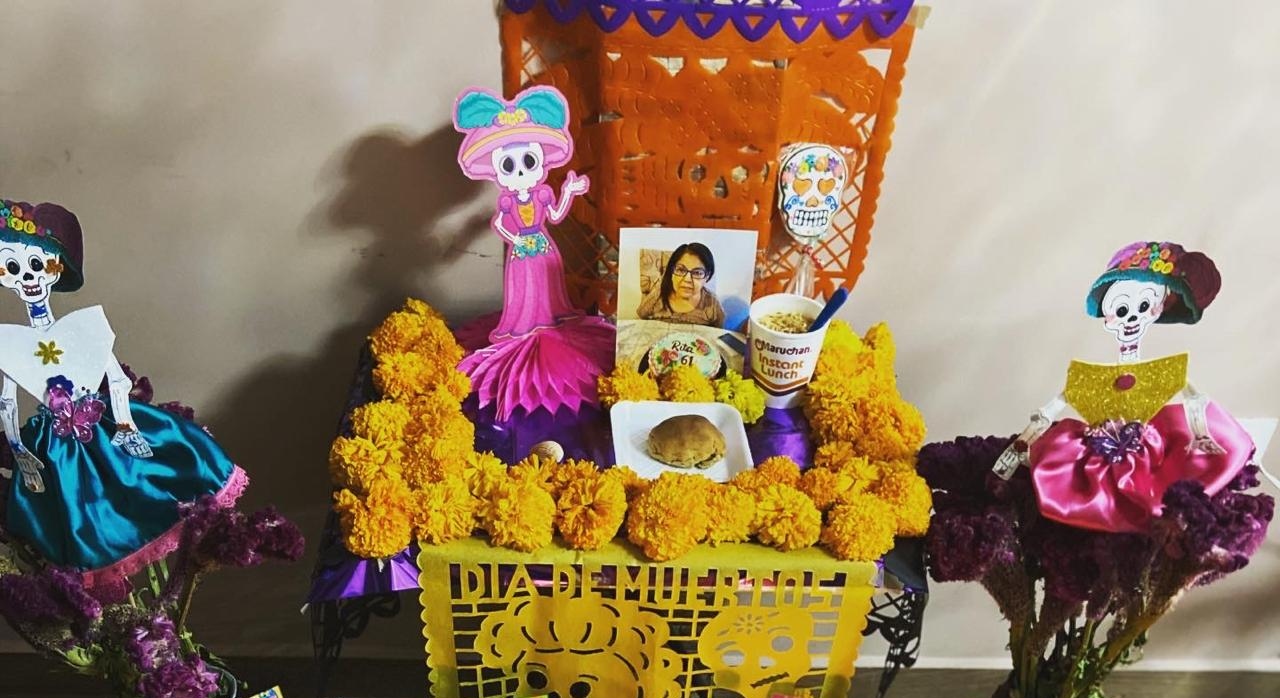
A cup, a book, a tool, or a copy of a recipe can help show what the life of a loved one was like.
The Smithsonian has included photographs and personal memories in its invitations to participate in community offerings.
That relationship between the objects and the honored person can guide the family’s selection.
Choose a few pieces and accompany them with an explanation. If the object is fragile or irreplaceable, you can show a photograph of it.
An Offering Shared from a Distance
Ask family members who live far away for a digital image or voice message.
You can listen to it together while observing the offering.
You can also prepare a list of songs that the remembered people enjoyed.
If you decide to share photographs of the altar on social media, agree beforehand which letters and images will remain private.
When Finished, Preserve the Memories
Keep letters, photographs, and paper decorations away from lit candles.
To illuminate near these materials, you can choose LED lights.
When you remove the offering, save the contributions with the name of who made them and the date.
A family folder can gather the letters, recipes, and drawings to return to them the following year and continue telling those stories.
Filed as: How to Make an Offering