Hispanic Heritage Without Borders: A Legacy That Lives On in Our Children
Por Miriam Gonzalez ·
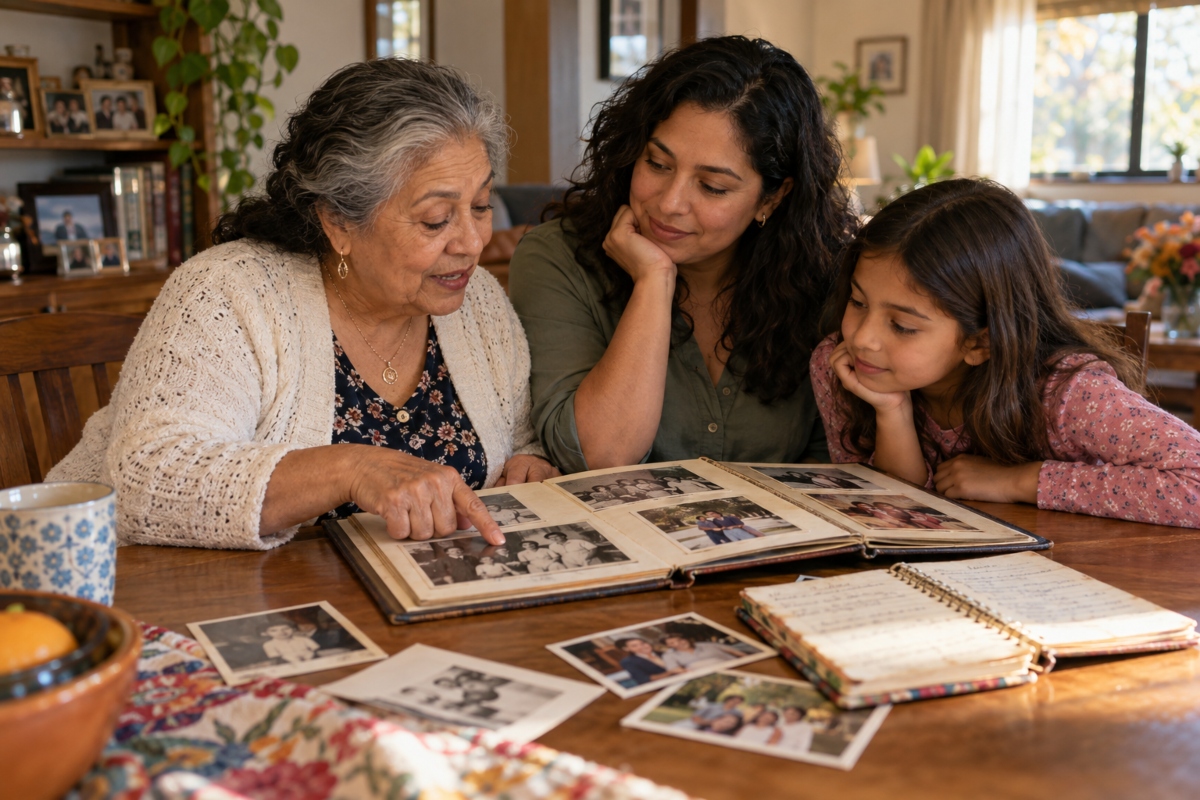
There are inheritances that don’t fit in a suitcase or appear in a document. A song that takes us back to childhood. The way to prepare a meal without measuring ingredients. A surname that someone learned to pronounce with pride. The voice of a loved one that we still remember when we hear certain words.
Hispanic heritage without borders is also made of these things: memories that find new ways to live when they pass from one generation to another.
In the United States, Hispanic Heritage Month is celebrated from September 15 to October 15. The commemoration began as a week in 1968 and was expanded to a month in 1988. Its purpose is to recognize the stories, cultures, and contributions of Hispanic communities. But its conclusion also invites a more intimate reflection: what do we want to preserve and what do we wish to pass on to those who come after us?
Roots Have Many Stories
There is no single way to be Hispanic.
There are families who arrived recently and others whose presence predates current borders.
As the National Park Service reminds us, some communities have roots in indigenous and Spanish-speaking peoples established in North America before the creation of the United States.
Experiences within the same family are also different.
For a grandmother, belonging can be linked to the place where she was born.
For her granddaughter, it can mean growing up in an American city and recognizing another part of herself in the stories she hears at home.
Those differences can open conversations.
Asking how our parents’ childhoods were, what they dreamed of, or what decisions changed their path allows us to know them beyond the role they play in our lives.
Before being mom, dad, or grandparent, they were also people trying to find their place.
Hispanic Heritage Without Borders Transforms
Transmitting a culture does not mean preserving it intact.
A recipe can change because ingredients are missing.
A celebration can bring together customs from several countries.
A family can converse in Spanish, in English, or alternate both languages at the same table.
Speaking Spanish can be a deep connection to one’s roots, but a person’s fluency does not tell their entire story.
There are those who learned it as children, those who recover it as adults, and those who approach their heritage through music, memory, or affection.
Children also build their own ways of belonging.
Listening to them allows heritage to be a conversation in which they can participate, ask questions, and contribute something of their own.
Pride Is Also Found in Everyday Life
Public recognition has value.
So does looking at those who sustain our daily lives: the person who accompanies a neighbor to an appointment, who shares what they know, or who encourages a young person to continue their studies.
Recognizing these contributions does not require turning sacrifice into an obligation.
Our history deserves space to speak of work and perseverance, but also of rest, joy, creativity, and dreams yet to be fulfilled.
The next generations deserve to receive that permission: they can honor their family and, at the same time, choose a different path.
What’s Worth Keeping
A photograph with names written on the back can prevent a face from becoming unknown.
A written recipe can preserve something more than a flavor.
A recorded conversation, with permission, can preserve a voice that someday we will miss.
They are simple ways to care for memory while we still can ask.
At the end of Hispanic Heritage Month, that task remains open.
To sit and listen.
To tell where we come from without deciding for our children how far they can go.
To give them roots that accompany them and space to grow.
Because one of the most valuable inheritances is knowing that there is a history behind us and that we still have the right to write the next page.
Filed as: Hispanic Heritage Without Borders