Glass skin: The risks of accumulating products to achieve ‘crystal’ skin
Por Miriam Gonzalez ·
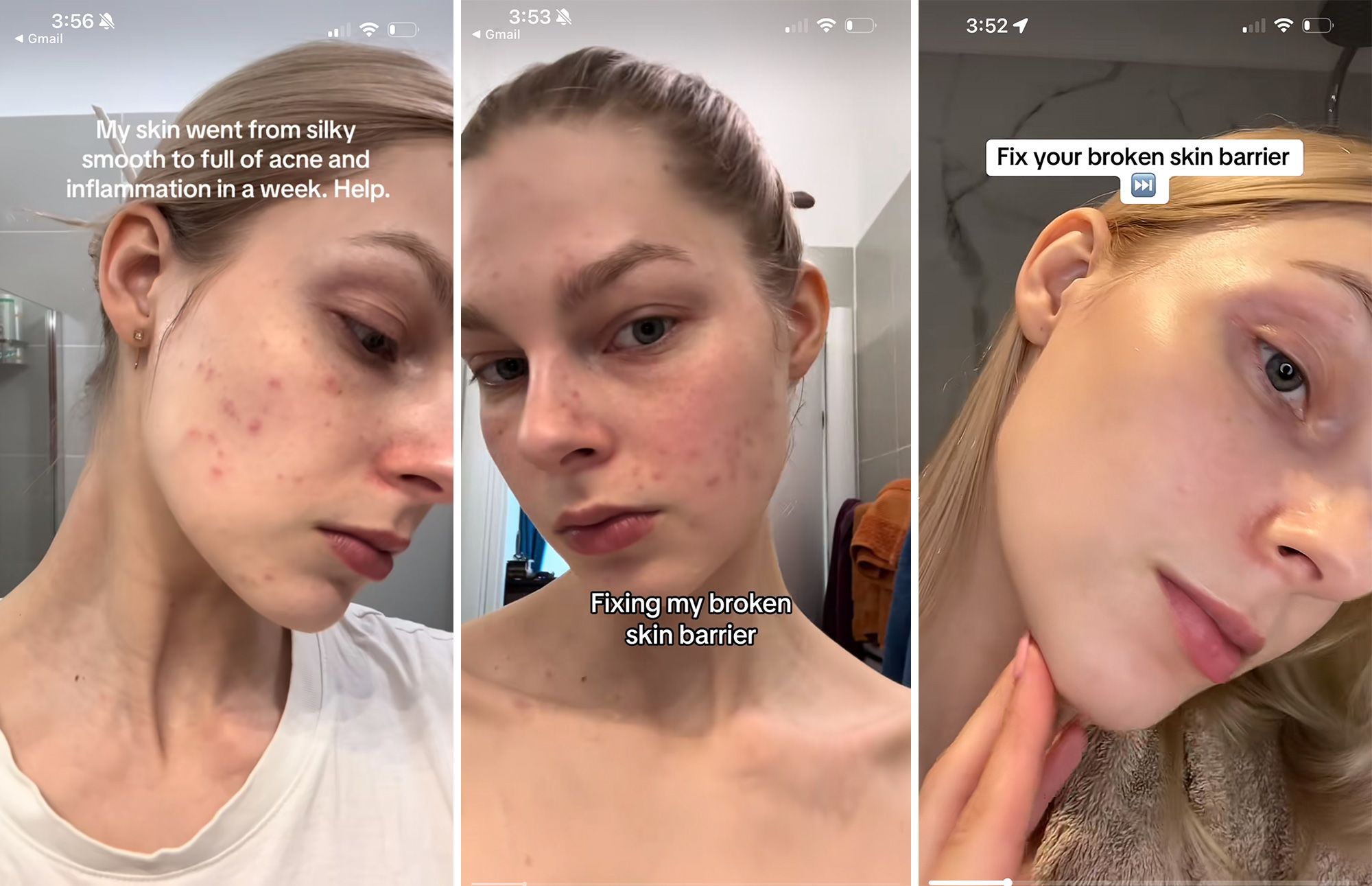
The risks of glass skin begin when achieving a radiant face becomes a race to add toners, serums, essences, and creams. Although moisturizing the skin and using sunscreen are recommended habits, applying too many products can encourage irritation, pore clogging, and breakouts, warns the American Academy of Dermatology.
The trend, linked to Korean beauty, seeks a very luminous, uniform appearance with seemingly no pores. On TikTok and Instagram, multi-step routines show striking results, but not necessarily suitable for everyone.
The problem, specialists explained to CNN, lies in copying combinations without considering skin type, tolerance, and possible reactions.
From luminous skin to a difficult-to-maintain routine
🌟 El lado peligroso de la «glass skin» 🌟
Un análisis de 38 videos virales de skincare coreano revela que ¡95% tiene información engañosa! 😱 Infórmate y cuida tu piel. 💖✨
#Skincare #GlassSkin #CuidadoDeLaPiel #Dermatología #SaludPiel https://t.co/cKKOnicAWR
— 6wnews (@6w_news) October 4, 2026
Greta Costioli, 29 years old, told CNN that her naturally dry skin seemed to respond well at first.
She even tried a method that involved applying seven layers of hydrating toner.
Then small red bumps appeared that intensified when she continued with extended routines.
According to her account, she had to reduce the steps because she was repeatedly compromising her skin barrier.
Her experience does not demonstrate that all routines produce the same result.
It does illustrate the importance of observing how skin responds and avoiding the assumption that a radiant appearance equals a well-tolerated routine.
What a study found about viral videos
Want glass skin? Start with these three tips for actually healthy skin instead of falling for the latest social media trend. https://t.co/189k2QE34B
— USA TODAY Entertainment (@usatodayent) October 8, 2026
Research presented at the 2026 Congress of the European Academy of Dermatology and Venereology evaluated 38 popular TikTok videos related to Korean skincare and the glass skin trend.
Nearly 95% contained at least one potentially misleading claim.
Only one mentioned the risk of irritation and two addressed sun protection.
None warned about contact dermatitis or recommended consulting a dermatologist.
According to CNN materials, approximately 45% advised combining multiple active ingredients without safety guidance.
The scope of the finding matters: it describes the videos selected for that analysis, not all Korean beauty content or all of its products.
Nor was it a clinical trial of the routines on patients.
Skin without pores is an unrealistic expectation
The Lazy-Girl Skincare Hack for Glass Skin is 35% Off for Prime Day https://t.co/gchVothfb7
— E! News (@enews) October 7, 2026
Dermatologist Jane Yoo, a specialist in New York, explained to CNN that pores do not disappear by layering products.
She also noted that among the problems she observes in patients who use too many cosmetics are contact dermatitis and acne or rosacea breakouts.
Pursuing a completely smooth surface can lead to insisting on products when the skin is already reacting.
Natural texture and the presence of pores do not, in themselves, mean that skin is poorly cared for.
What to do when discomfort appears
Glass skin is actually just a healthy barrier, but most people skip the PDRN recovery step. Does your skin feel tight or inflamed after you cleanse it? https://t.co/8rNsSCIMwD
— Sophia Chen (@inapetrus_2011) October 3, 2026
Tightness, itching, sensitivity, inflammation, and flaking can indicate that the skin barrier is compromised, explained to CNN dermatologist Mona Gohara, clinical professor at Yale.
When faced with these discomforts, she recommended pausing physical exfoliants, chemical exfoliants, and cosmetic retinoids, and simplifying care with gentle cleansing, lukewarm water, and moisturizing.
She also advised maintaining sun protection during the day. If you use a prescribed treatment, consult with the person who recommended it before modifying it.
Caring for skin before reproducing a trend
Nearly 95 per cent of viral TikTok ‘glass skin’ tutorials promote misleading skincare advice completely devoid of safety warnings, a major European dermatology study reveals
https://t.co/aqnHABuHAO— Vinay Patel (@VinayPBPatel) October 2, 2026
The specialists consulted agree that Korean beauty is not the problem.
The concern lies in presenting a complex routine as if it worked the same for everyone.
Gohara advises introducing one product at a time, starting slowly, and using broad-spectrum sunscreen with SPF 30 or higher.
The American Academy of Dermatology also recommends adapting the routine to your skin type with professional guidance.
You can seek luminosity without turning every video into a shopping list.
A routine that your skin tolerates matters more than reproducing the finish that appears on a screen.
Filed as: Glass skin risks
With information from CNN Newsource