Measles Outbreak in Pennsylvania Puts Infants and Vulnerable People at Risk
Por Miriam Gonzalez ·
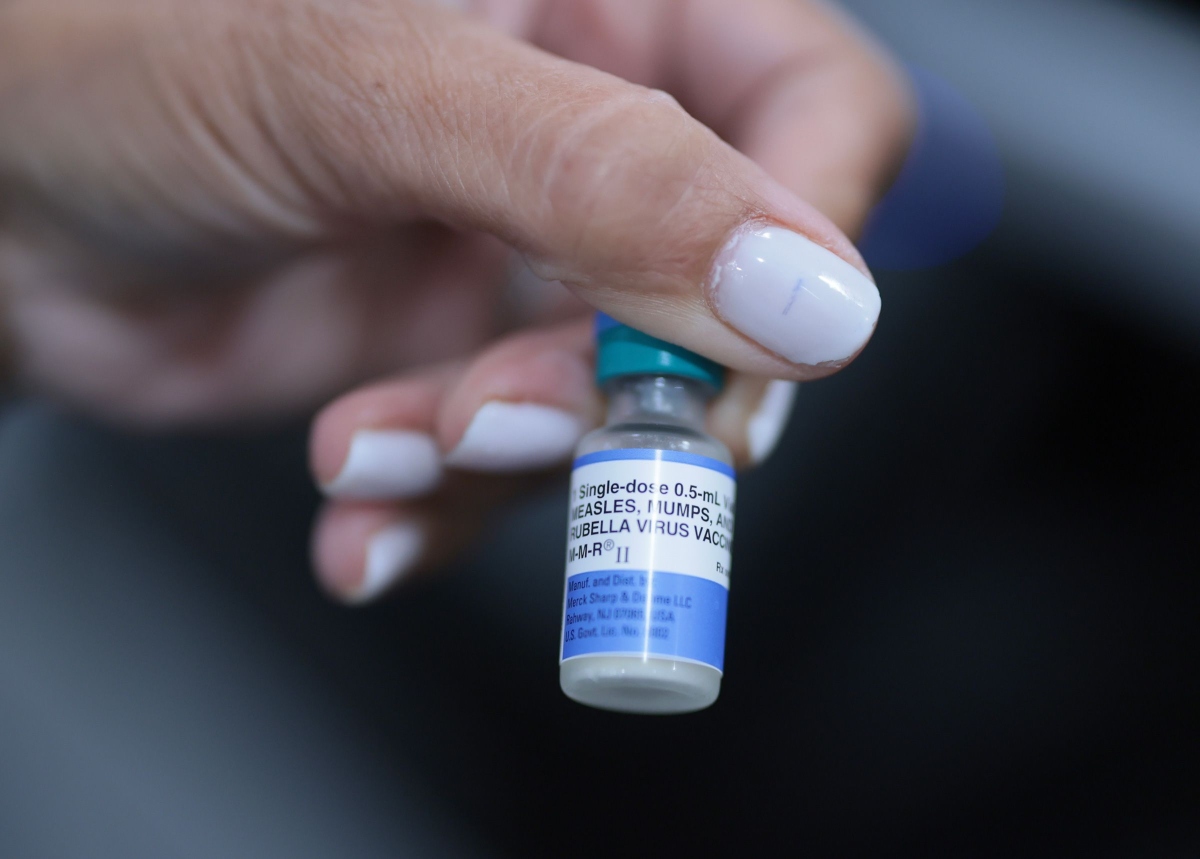
A measles outbreak that continues to spread in Pennsylvania is putting people who cannot fully protect themselves through vaccination—including infants too young to be vaccinated and patients with compromised immune systems—in particularly vulnerable situations.
The state has confirmed nearly 400 cases of measles this year, and about half of them are concentrated in Lancaster County, an area with large Amish and Mennonite communities. On Tuesday, state officials also reported two measles-related deaths in that county—the first recorded there in 35 years.
The measles outbreak in Pennsylvania has begun to spread to hospitals, schools, and other places frequented by particularly vulnerable people.
Among them is the newborn son of Brittany Nicole Sponenberg, who had been hospitalized for nearly two months in a neonatal intensive care unit in Danville while his lungs and digestive system continued to develop.
The family received a call they never expected: the baby had been exposed to measles right there in the NICU.
A visitor with measles entered the neonatal unit
🚨 Two unvaccinated people died of measles in Pennsylvania—the first measles-related deaths in the United States in all of 2026. RFK Jr., who is in charge of the nation’s public health, has been spreading misinformation about vaccines for years. Trump signed an order to dismantle the pic.twitter.com/TYqPVSUZi7
— DRACO (@DRACOBARUK) August 31, 2026
Sponenberg and his son were exposed at Geisinger Medical Center after an adult visited the unit between August 14 and 17.
According to the information the mother received, the visitor developed a fever and a rash on August 17 and tested positive for measles the following day.
By then, the baby had already been transferred to another hospital closer to the family’s home.
Although the doctor described the risk of the newborn developing the disease as low, he explained that the baby would need to receive an additional medication via injections in both thighs and remain in an isolation room with special air circulation.
According to his mother, the little boy will have to wait 28 days before he can be considered completely out of danger.
For Sponenberg, the revelation added an unexpected concern to a process that had already been complicated.
Her son had had to overcome numerous problems stemming from his premature birth, and now he had to face a potentially highly contagious infection.
Why are premature babies especially vulnerable?
Dr. Buddy Creech, a pediatric infectious disease specialist at Vanderbilt University, explained that premature babies are among the most vulnerable patients in a hospital when it comes to infections.
One reason is that they are born before certain protective antibodies can be fully transferred from the mother to the baby during the final stages of pregnancy.
In addition, many require medical devices, and in cases of extreme prematurity, the skin does not yet function as a fully developed protective barrier.
Measles can also be more dangerous in young children.
Children under 5 are at greater risk of serious complications, such as pneumonia and brain inflammation, compared to older children.
Other hospitals also reported exposures
🎥| RFK Jr. questions reports of measles deaths in Pennsylvania and accuses the state of a lack of cooperation
RFK Jr.: “According to a statement released today by the Lancaster County Commissioner, they cannot find any measles deaths.”
“The state refuses to… pic.twitter.com/oONyNMsDjL
— Claro y Directo (@ClaroyDirecto_) August 27, 2026
Geisinger Medical Center has not been the only medical center affected.
Penn State Health Golisano Children’s Hospital notified families of a possible exposure after a person who later tested positive spent approximately two and a half hours in the main lobby on August 17.
Recent exposures were also reported in the emergency department at UPMC Children’s Hospital.
In light of the rise in cases, doctors are asking people who suspect they have measles not to go directly to hospitals, clinics, or urgent care centers without calling ahead.
Dr. Jeffrey Martin of Lancaster General Health urged people to call ahead.
This allows healthcare workers to prepare for a safe evaluation and reduce the risk of exposing other patients while they wait for care.
Hospital limits visits to the neonatal unit
After the incident, Geisinger changed its access protocols.
The hospital announced that, for the time being, it will only allow parents or legal guardians who do not show any signs or symptoms of measles to enter the NICU and the nearby children’s hospital.
They will also be advised to wear a surgical mask before entering.
The institution explained that the new measures are intended to protect patients, visitors, and employees as cases rise in the region.
However, the hospital acknowledges that the screening system relies on people providing accurate and complete information upon admission.
Sponenberg questioned why visitors are not required to prove that they have been vaccinated.
Specialists in pediatric infectious diseases explained, however, that hospitals rarely completely restrict a parent’s access to their child’s bedside.
When a person has an extremely contagious disease, special isolation rooms and other measures can be used to prevent the pathogen from spreading.
The outbreak is hitting Lancaster County particularly hard
Ep 294—Pennsylvania reported the first two measles-related deaths of the year in the U.S., according to authorities. The governor warned about the impact of misinformation and the decline in vaccination rates. pic.twitter.com/PAMufaDBx2
— Asi Veo Las Cosas (@_asiveolascosas) August 27, 2026
Geisinger is located in Danville, in northern Lancaster County, a region known for its large Amish and Mennonite communities.
These populations do not universally reject vaccines, but their vaccination rates tend to be lower than those of the general population.
The available data show significant differences even within the same county.
During the last school year, approximately 88% of kindergarten students and 83% of seventh graders in Lancaster County started school fully vaccinated against measles.
Both figures are well below the 95% coverage rate considered necessary to provide strong community protection or herd immunity.
And those percentages are averages.
While some public schools report vaccination rates close to 100%, some Mennonite and Christian schools in the county have rates below 50%.
A bus driver stopped working out of fear of infection
The outbreak is also affecting the daily lives of vulnerable residents.
Kimberly Reichenbach, 50, lives in Leola and has been earning an income over the past few years by driving Amish clients to shops and other activities.
Reichenbach has severe asthma, and his partner has type 1 diabetes.
After transporting sick clients or those who had been exposed to measles separately, he decided to temporarily stop working.
On one of the trips, a woman told him at the end of the ride that she was grateful to have been able to stock up her pantry because her whole family had measles and she expected to get sick too.
For Reichenbach, continuing to work began to pose a risk she was not willing to take.
She even canceled a planned visit to see her young nephews after her doctor advised her to avoid it.
Although she and her partner are vaccinated and will likely be protected after their exposures, she decided not to risk bringing the virus near babies and young children.
Community protection is weakening
⚠️🚨 Two unvaccinated people have died from measles in Pennsylvania. These are the first deaths from this disease in the state in 35 years and the first recorded in the U.S. in 2026. 🇺🇸
🦠 The U.S. is experiencing its worst year for measles since 1991, amid a decline… pic.twitter.com/c6du2m31dS
— Jose Ramos Vivas (@joseramosvivas) August 25, 2026
The United States declared measles eliminated in 2000, but now, with the measles outbreak in Pennsylvania, everything could change.
For years, high vaccination rates prevented the virus from sustaining transmission within the country.
But that protection has weakened in some communities.
The latest data from the CDC show that 4.2% of kindergarteners had an exemption for at least one required vaccine during the 2025–2026 school year, the highest percentage on record.
Exemptions increased in all but nine states, and nearly half of them have rates above 5%.
At the same time, the federal government is changing its stance on childhood vaccinations.
This month, President Donald Trump signed an executive order directing the Department of Health and Human Services to explore splitting the MMR vaccine—which protects against measles, mumps, and rubella—into three separate shots.
Trump linked the measure to autism, even though dozens of scientific studies have examined that possibility without finding any evidence of a link between vaccines and autism.
95% makes a significant difference
Because measles is highly contagious, vaccination rates are a particularly important factor.
When approximately 95% of a community is immunized, it becomes much more difficult for the virus to spread from one person to another.
That protection does not benefit only those who have been vaccinated.
It also reduces the likelihood that the virus will spread to infants who cannot yet be vaccinated, patients undergoing certain treatments, immunocompromised individuals, and other groups that rely in part on the protection provided by those around them.
The measles outbreak in Pennsylvania is showing what happens when that community barrier weakens.
Families with premature babies, people with underlying health conditions, and other vulnerable residents are changing their routines, avoiding certain places, and facing exposures that could have been prevented through high immunization rates.
And for a mother who has spent months watching her baby fight for his life in the intensive care unit, the problem was no longer just a statistic.
As Sponenberg explained, measles became yet another battle her son should never have had to face.
Filed under: Measles Outbreak in Pennsylvania