



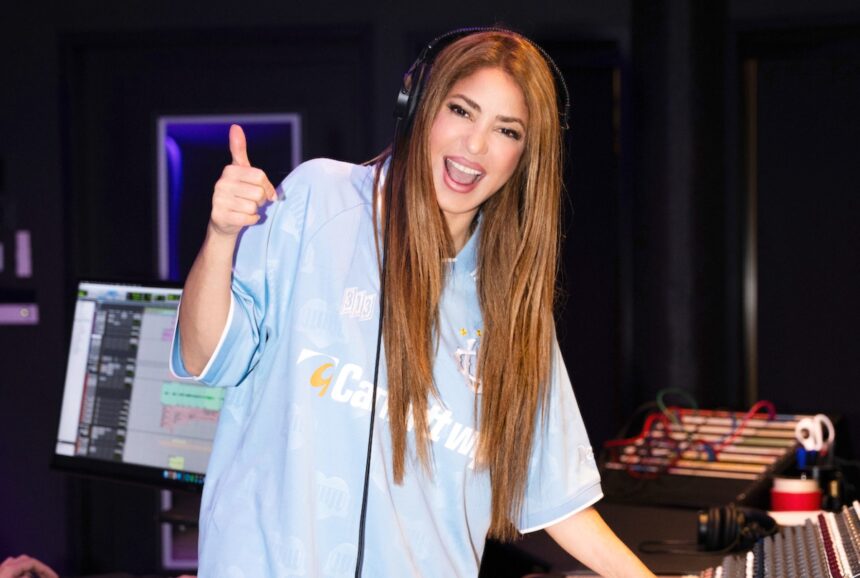
Shakira released “Dai Dai” on May 14, 2026, and from the very beginning, it was presented as the official song of the 2026 FIFA World Cup. The single blends Spanish and English and incorporates expressions of encouragement similar to “vamos” in different languages—a formula designed to represent the global spirit of the tournament.
The song was featured during broadcasts, ceremonies, and the most important moments of the championship held in the United States, and reached millions of streams on digital platforms within days of its release. The Colombian singer thus once again took center stage in the international soccer world.
The Barranquilla native’s participation in the 2026 World Cup held special significance because it marked her fourth appearance in a World Cup. She had previously performed at the 2006 World Cup in Germany, the 2010 World Cup in South Africa, and the 2014 World Cup in Brazil, becoming one of the artists most closely associated with the tournament’s recent history.
This time, FIFA once again chose her as the lead performer for “Dai Dai,” a decision that sparked a wave of comments on social media. While millions of fans celebrated her return, critical voices also emerged, questioning the singer’s continued involvement in major sporting events.
José Ramón Llaca’s criticism that sparked the conversation about Shakira
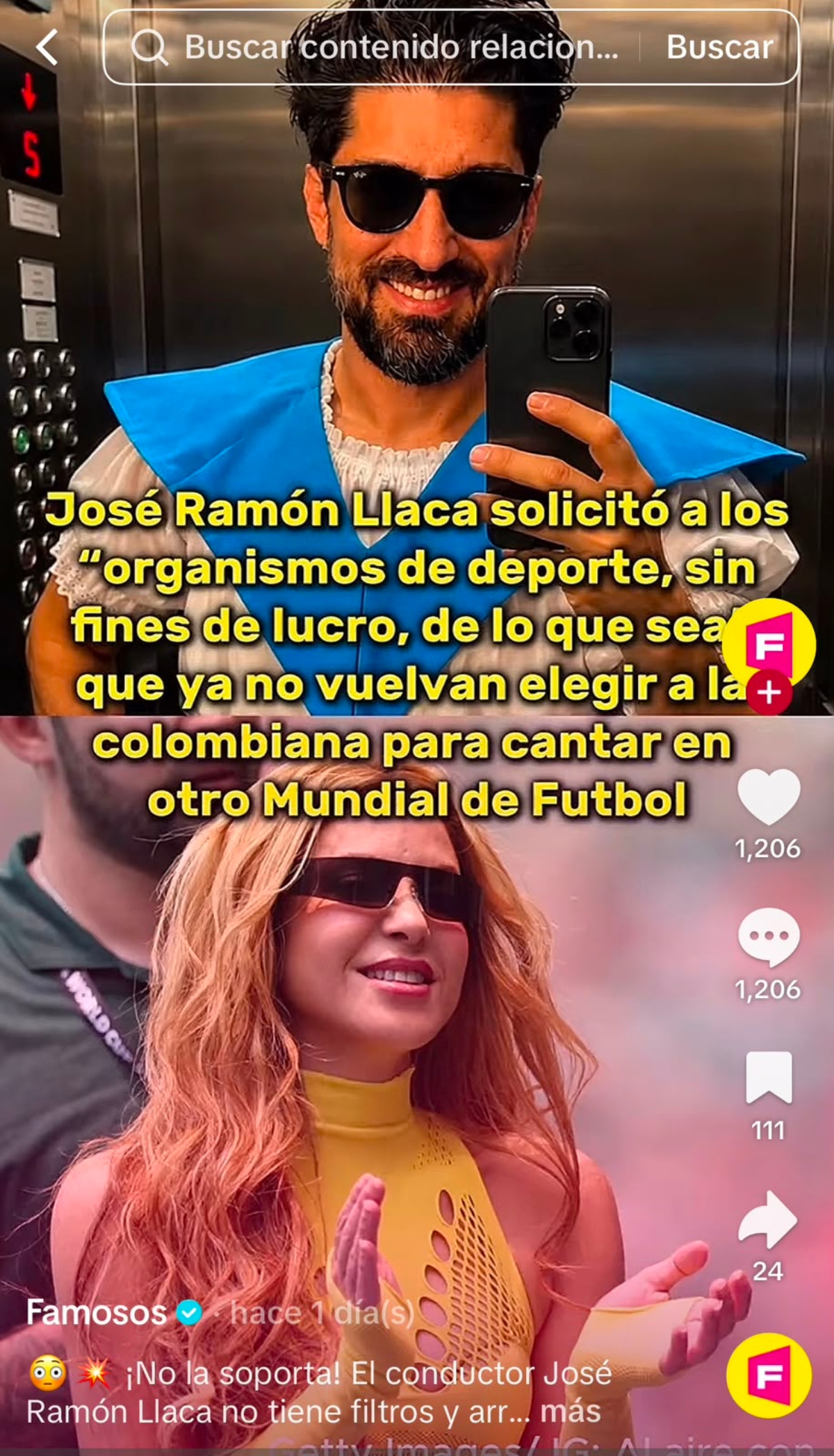
One of the comments that generated the most buzz was that of Mexican content creator José Ramón Llaca. In a video posted on social media, he openly expressed his frustration with Shakira’s constant presence at the World Cup.
“I’m sick and tired of Shakira. Please, I’m sending this message to all sports organizations—whatever they may be—to please stop having Shakira sing any of her fucking songs,” he said.
Llaca argued that the artist has been associated with the World Cups for more than a decade and a half. “We’ll have to put up with her from 2010 to 2026,” he said, explaining his position.
The influencer also asked FIFA to consider other performers who, in his view, are more relevant today. “There are other artists who are just as beautiful, who move just as well, who sing better, and who are more on-trend. No more Shakira, please,” he added.
In the same video, Llaca extended his criticism to Coldplay, the band that performed during the halftime show at the 2026 World Cup final.
“I’m sick and tired of Coldplay, too,” he said, and later added that he thought they were an overly optimistic band. He even said that he knew they were about to come on stage when he saw kids jumping around during the show.
Despite his comments, he acknowledged that he found the show entertaining overall and noted that he enjoyed the production of the event.
The Response on Social Media
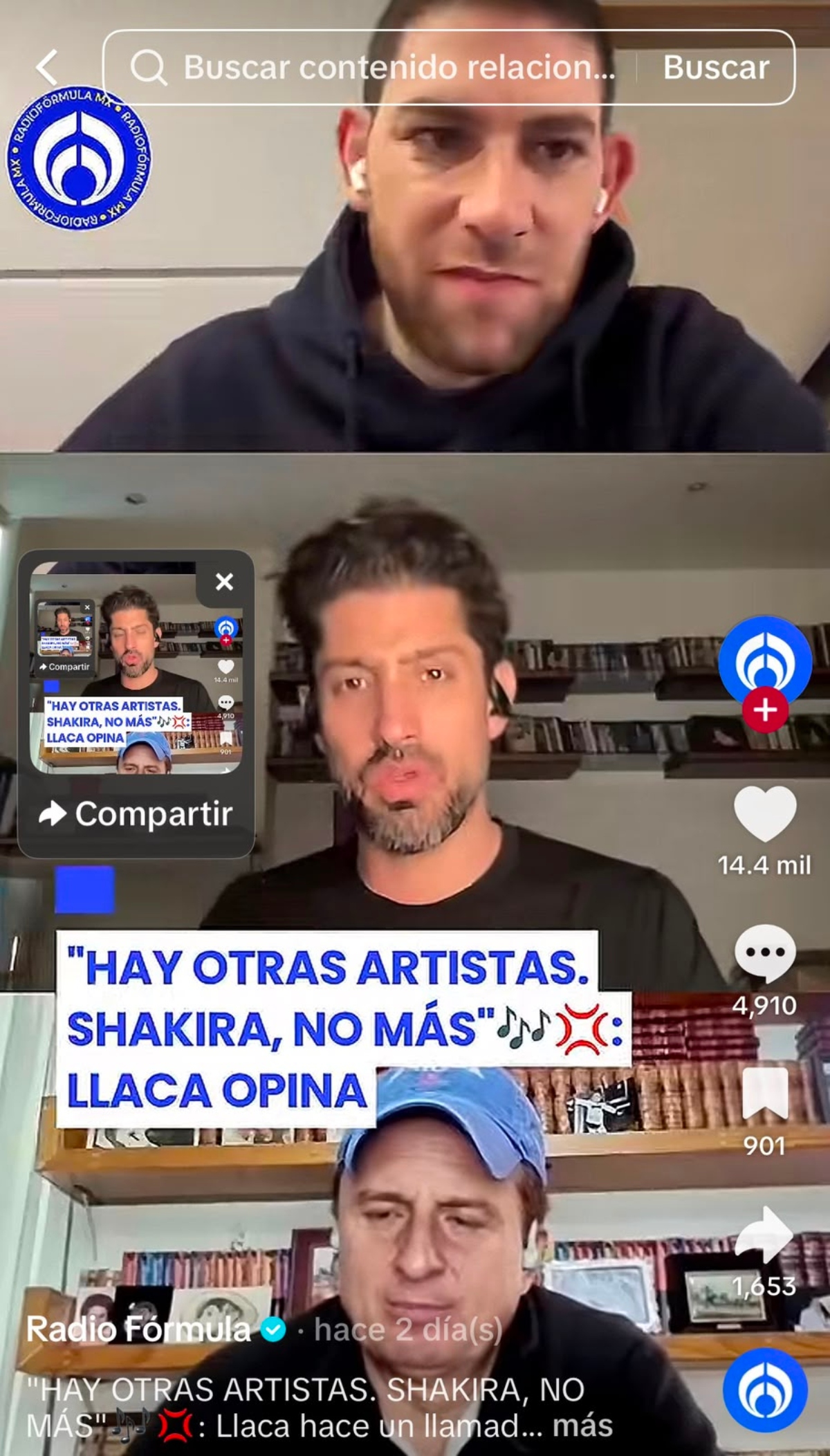
The content creator’s statements sparked an immediate reaction among users. Most of the comments defended Shakira and highlighted her importance in pop culture and soccer.
“Most of us want to see Shakira—what’s the problem?” wrote one user. Others pointed out that several female artists have tried to fill that spot without achieving the same international impact.
The responses showed that the singer continues to forge a strong emotional connection with her audience, especially when it comes to global sporting events.
Far from the controversy, Shakira’s appearance at the final left an image that went viral. Hours after her performance alongside Burna Boy and the children from the Ghetto Kids Foundation at MetLife Stadium, hundreds of passengers began singing “Dai Dai” on the New York City Subway.
The videos showed an entire train car singing along to the tournament’s official song as it played over the PA system. Shakira herself shared the footage on her social media and wrote: “That’s how I like to see you—happy.”
‘Dai Dai’: A Success That Keeps Growing
Criticism aside, the commercial impact of “Dai Dai” has been overwhelming. The song remained in the top spots on Spotify Global and Billboard Global, establishing itself as one of the biggest hits of the summer of 2026.
Her streaming performance and the impact of the World Cup final have solidified Shakira’s position as one of the Latin artists with the widest international reach. While some question her constant presence at World Cups, the streaming numbers, audience response, and spontaneous celebrations surrounding the song prove that “Dai Dai” succeeded in becoming the soundtrack to a tournament that is now part of world soccer history.
Here you can watch the content creator’s video about Shakira.