Do Your Knees Hurt Going Down Stairs? The Problem Could Be in Your Body’s ‘Brakes’
Por Miriam Gonzalez ·
Going up stairs may not be a problem, but when you start descending them that familiar knee discomfort appears. Although it would be easy to think the joint is necessarily responsible, the explanation could be found elsewhere: your body’s ability to «brake.»
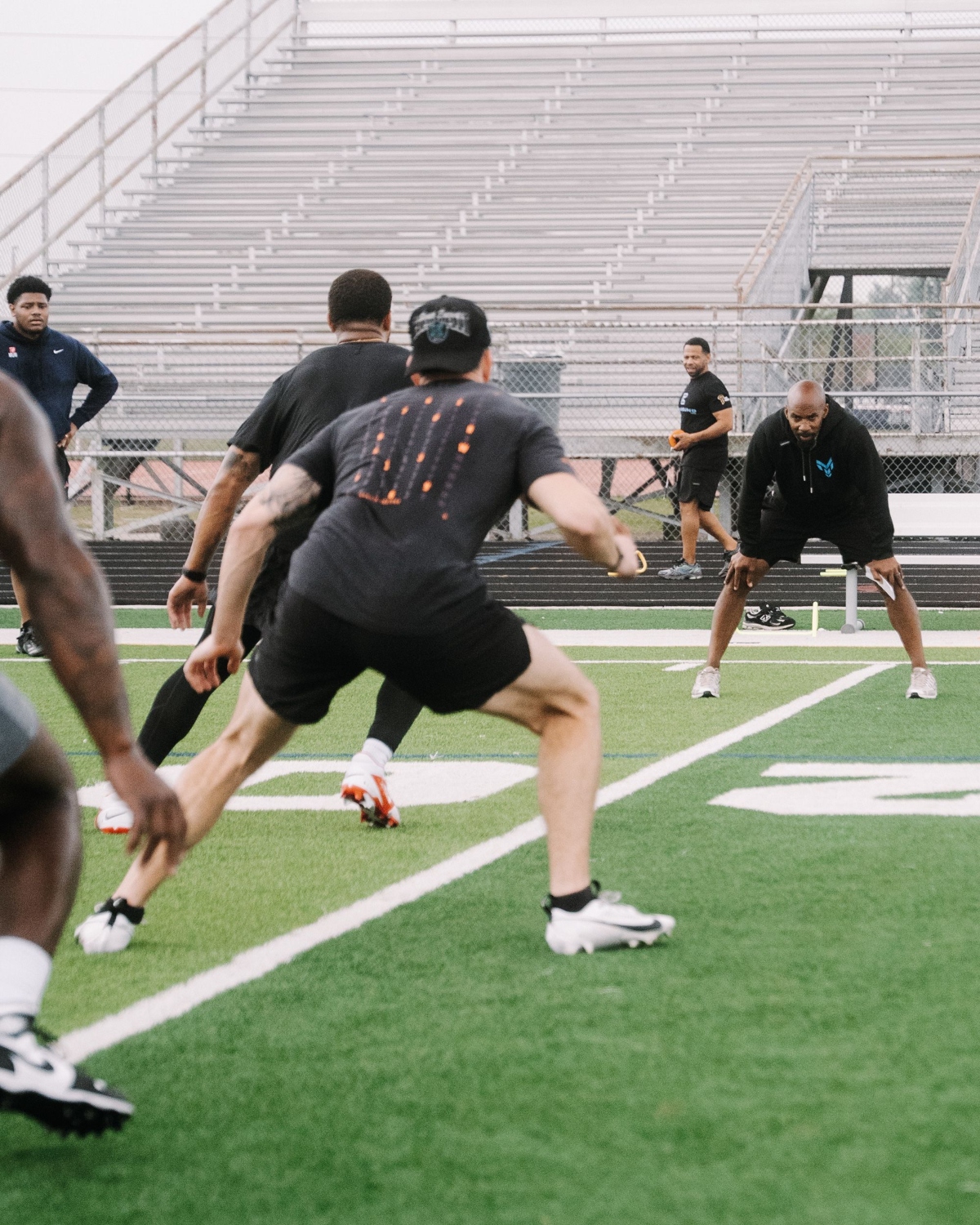
Many exercise programs are designed to generate force forward or upward. We push, lift weight, run and train to produce power, but we pay much less attention to an equally necessary ability: slowing down in a controlled manner. This process is known as deceleration.
Exercises to Brake Movement
When the system responsible for absorbing and distributing forces is not sufficiently trained, gravity and momentum can generate greater stress on joints and connective tissues, increasing the possibility of chronic discomfort and injuries.
Dana Santas, a certified strength and conditioning specialist who has worked with professional athletes, explains to CNN that Major League Baseball (MLB) and National Football League (NFL) teams dedicate entire training blocks to this ability.
The reason is important: many anterior cruciate ligament (ACL) injuries that occur without apparent contact happen when an athlete lands, stops, or changes direction and not necessarily while accelerating.
But learning to brake correctly is not something exclusive to professional athletes.
Your Body Uses Its «Brakes» Every Day
You probably never need to slide into a baseball base or stop abruptly to catch a pass, but you are constantly decelerating during everyday activities.
You do it when you go down stairs, walk downhill, sit in a chair, or need to stop quickly to avoid tripping.
Even suddenly stepping aside because a pet or person crossed in front of you requires your body to absorb and control forces.
Yo Murphy, a former professional football player and founder of Yo Murphy Performance in Tampa, Florida, summarizes the importance of this ability with a simple comparison: «You need brakes for all that gas.»
Without the ability to decelerate correctly, he explains, it also becomes more difficult to change direction, stop, react, and position yourself properly to absorb a force.
How Do Your Body’s «Brakes» Work?
Deceleration depends largely on what are called eccentric contractions.
These occur when a muscle generates tension while lengthening.
During braking, muscles function similarly to shock absorbers: they lengthen under load to help dissipate force before it reaches joints directly.
When this system works properly, an important part of the absorption occurs in the large muscles of the posterior chain, that is, those located mainly on the back of the body.
Among them are the glutes, hamstrings, calves, and lower back muscles.
Why Can Your Knees Hurt When Going Down Stairs?
Modern lifestyle can contribute to these posterior muscles participating less than they should.
Spending a lot of time sitting can favor posture problems and reduce glute utilization.
With poor alignment and a weakened posterior chain, your knees can end up receiving an excessive amount of force when descending, stopping, or sitting.
Descending stairs is especially demanding because gravity pulls the body toward the next step.
The quadriceps must work eccentrically to control the speed at which the knee bends and the body descends.
But knees are not designed to do all that work alone.
The muscles of the back, hips, legs, and ankles must also participate to absorb and distribute the load.
Body Position Makes the Difference
Effective deceleration also depends on proper alignment.
Murphy explains that good braking begins by lowering your center of mass and keeping your feet under your body.
This allows you to position ankles, knees, and hips in a way that facilitates load sharing rather than concentrating it on a single joint.
To achieve this, he recommends moving your hips slightly backward while flexing your knees and lowering your center of mass.
In that position, glutes and hamstrings can share the effort with the quadriceps, while the calves support the ankles and back muscles help stabilize the spine.
4 Exercises to Brake Movement
The following movements are designed to strengthen the muscles and patterns necessary to better control deceleration.
They can be practiced two or three times per week and use a wall, railing, or sturdy chair for support when necessary.
Before starting this or any new exercise program, consult with your doctor or physical therapist. Stop immediately if you feel pain.
1. Slow Step Downs
Position yourself on the lower step of a staircase and hold the railing.
Tilt your hips slightly backward and lower one foot toward the floor slowly, taking between three and five seconds.
The goal is to control the entire descent.
Return your foot to the step and repeat.
Perform eight repetitions on each side.
2. Slow Squats
Stand with your feet separated approximately at hip width.
Inhale and take a full five seconds to lower into a squat. If comfortable, try to get your thighs parallel to the floor.
Then exhale as you return to standing at normal speed.
The important part of the exercise is precisely the controlled descent.
If performing a squat with just your body weight is too difficult, you can use a chair. Take five seconds to sit down in a controlled manner and then stand back up.
Complete two sets of eight repetitions.
3. Controlled Lunges
Step forward and take approximately three seconds to lower your back knee toward the floor.
Keep your rib cage aligned over your pelvis and make sure your front knee stays in line with your foot.
Then push to return to the starting position.
If you have difficulty with balance or strength, use a wall or the back of a chair for support.
Perform between six and eight repetitions on each side.
4. Walking and Progressive Braking
This exercise aims to bring the training to an everyday movement.
Walk at a good pace for at least six feet—approximately 1.8 meters—down a hallway, sidewalk, or slight incline.
Then come to a complete stop using three progressively shorter steps.
While braking, soften your knees, move your hips slightly backward, and lower your center of mass.
The last steps should be under your body rather than extending one foot too far forward.
When you have more control, you can increase walking speed or progress to a light jog.
Repeat five times.
Stumbling Can Be a Signal Worth Paying Attention To
Losing stability when reaching the end of a step or taking several steps forward after trying to stop abruptly should not necessarily be dismissed as simple clumsiness.
Santas points out that it can also indicate a deficiency in deceleration ability.
Practicing these exercises two or three times per week and gradually increasing difficulty as strength and control improve can help train this skill.
The goal is not just to develop stronger muscles, but to teach your body to better distribute the forces that appear each time we slow down.
With consistency, everyday actions like going down stairs, walking downhill, or stopping suddenly can feel more stable and controlled.
And if your knees usually bother you precisely when going down, training how your body «applies the brakes» could be a piece you hadn’t considered until now.
Filed as: Exercises to Brake Movement
With information from: CNN Newsource