Conchasúchil: The Viral Day of the Dead Bread That Wants to Put the Concha on Par with the Croissant
Por Miriam Gonzalez ·
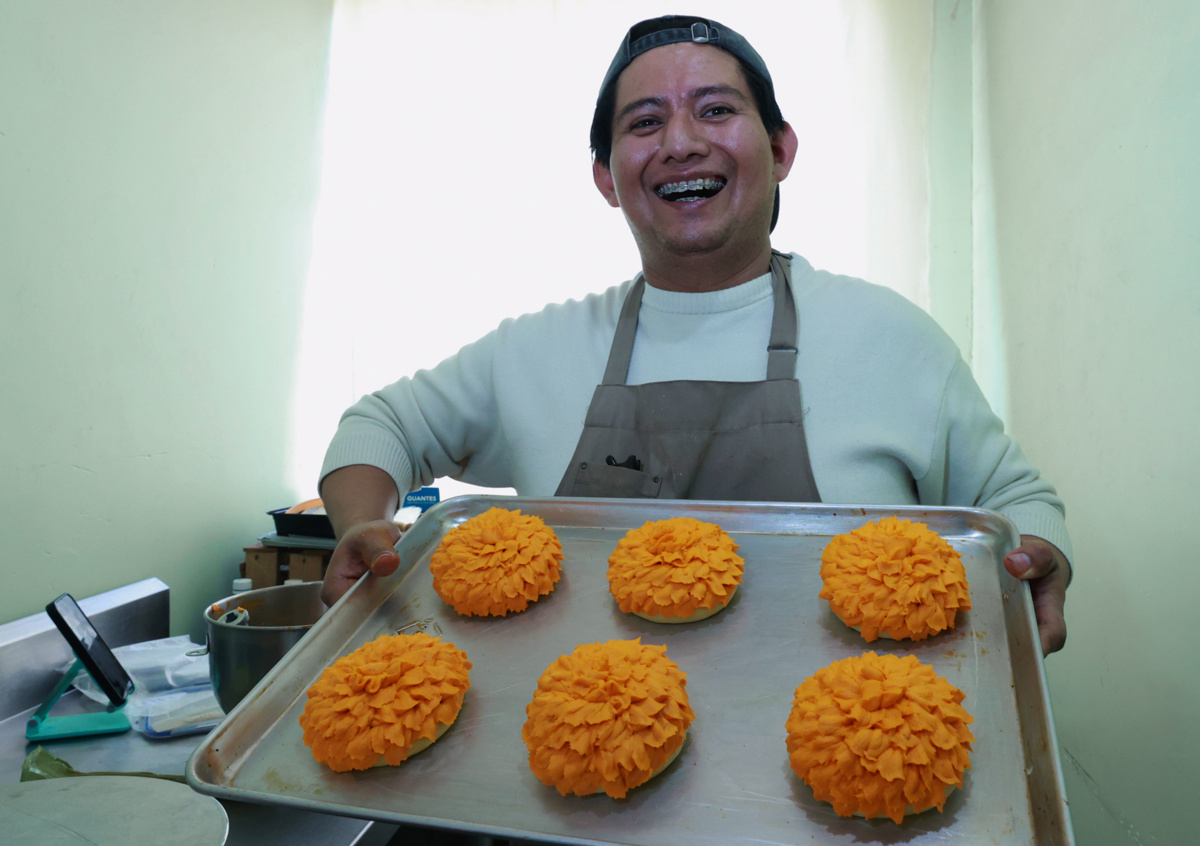
Jonathan Barrera’s conchasúchil transforms an everyday bread into a flower that can also occupy a place on the altar. The Mexican baker reinterpreted the concha with a covering inspired by the cempasúchil, one of the symbols of Day of the Dead, and turned his artisanal work into a social media phenomenon.
But his intention goes beyond selling an eye-catching product. In an interview with EFE, Barrera explained that he wants to take advantage of that attention to give greater recognition to Mexican bakery and those who keep the craft alive.
Conchasúchil, the viral bread of Jonathan Barrera
🌼🥖 ¡Raza, llegó la conchasúchil! 😂 La CDMX ya tiene este peculiar pan creado por Jonathan Barrera, de Bestcake CDMX, para Día de Muertos. Se vende sobre pedido y con entrega únicamente en CDMX. 👀💀
#Conchasúchil #DíaDeMuertos #CDMX #PanDeMuerto #Cempasúchil #México #VMK https://t.co/0DlTpqb8WV
— Viva México Kbronez (@VivaMexKbronez) October 3, 2026
The creation combines the characteristic crispy coating of the concha with decoration made using a pastry bag.
To preserve the structure during baking, the baker relies on knowledge of food chemistry.
The result is a visual reinterpretation of a recognizable bread, linked to a celebration in which food is part of the memory of those who have passed away.
Barrera wants his products to be shared and also integrated into family altars.
The cempasúchil provides that symbolic connection.
According to the National Institute of Anthropology and History, its flowers are traditionally used to mark the path of spirits toward the altar, along with elements such as photographs, water, candles, and food.
An engineer who learned pastry-making since childhood
Los panaderos la vuelven a hacer, con ustedes: La Conchasúchil. https://t.co/uJ5VOx5NfI
— Tatianotzin Oficial🥦🎀 (@tatianotzin) October 31, 2025
Barrera is 35 years old, holds a degree in renewable energy, and began learning pastry-making on his own from age 10.
That combination of curiosity and scientific training, he explained to EFE, allowed him to experiment without limiting himself to a single way of working.
Instead of assuming that a technique could not be modified, he decided to test what happened when he changed it.
From that perspective, he developed proposals that preserve references to Mexican bakery while exploring other ways of presenting doughs and their toppings.
His work also raises a comparison with the international projection of other specialties.
For him, the concha has its own history, identity, and value that deserve to be recognized alongside products as popular as the croissant.
Virality brought more orders to his business
Si creías que lo habías visto todo, ahora llega la «conchasúchil» a la Ciudad de México con motivo de las celebraciones del Día de Muertos 🌼
La conchasúchil fue creada por el ingeniero, panadero y pastelero Jonathan Barrera, quien a través de su negocio de repostería artesanal conocido como Bestcake CDMX, dio a conocer este postre, ahora que llega esa temporada del año donde recordamos a los que ya no están. 🕯️🪦
Jonathan nformó a través de su cuenta oficial de Facebook Bestcake Cdmx que trabaja desde su casa, sin embargo todos sus productos se entregan sobre pedido, únicamente dentro de la Ciudad de México. 👨🍳
Si deseas consultar su catálogo completo y precios puedes agregar su número de WhatsApp 7581038851.
— El Heraldo de México (@heraldodemexico) October 1, 2026
The digital impact also had commercial consequences.
According to Barrera himself, his business income quintupled since his creation went viral.
He also noted that he was accumulating hundreds of pending requests, handled exclusively through mobile messaging.
The baker does not present industrial production as his main goal.
He prefers to use visibility to spark interest in the craft and in Mexican products.
Nor does he seek to patent his designs, even though other businesses have begun replicating them.
His position is that sharing knowledge can enrich gastronomic culture and encourage more people to look at national bakery with pride.
A ring bread to share memories
Among his proposals is also a ring-shaped Day of the Dead bread that revisits the format of the Kings’ Cake.
It is made with doughs flavored with orange blossom and butter, and replaces the figures of baby Jesus with small skulls.
The intention, he explained, is to invite diners to remember joyful moments with their deceased loved ones.
That link between bread and memory connects his creations with the family celebration of Day of the Dead.
Barrera also expressed concern about the lack of generational succession in artisanal workshops.
He considers that innovating in presentation can bring new audiences to the craft.
His aspiration is that traditional Mexican bakery achieve greater international recognition; a heritage designation remains a wish he raises, not an announced honor.
Archived as: Conchasúchil the viral bread