Sara Bareilles’ “Good Grief” Turns Pain into an Act of Love
Por Miriam Gonzalez ·
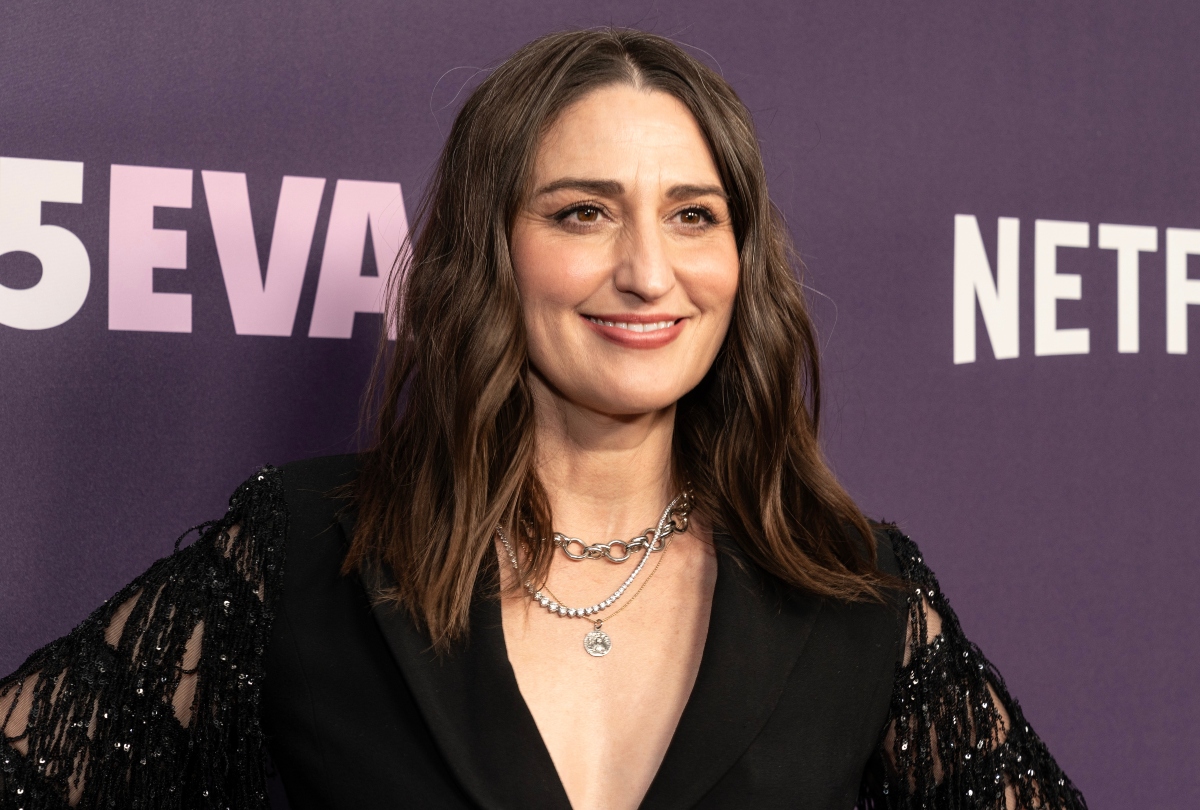
Sara Bareilles decided to stop hiding from her pain. After losing two close friends to cancer, going through a particularly difficult period for her mental health, and facing a prolonged battle with infertility, the singer found in music a way to connect with emotions that had long frightened her.
The composer, actress, and producer drew on those experiences for “Good Grief,” an intimate project that began without a fully defined direction. It wasn’t until the final stages of recording that she realized all the songs were connected by a single theme: grief.
Bareilles does not present the album as a collection of answers or as a story in which all suffering has been overcome. On the contrary, she writes from the perspective of a process that is still unfolding, as she tries to come to terms with the absence of her friends, her moments of anxiety, and the uncertainty that accompanies her desire to become a mother.
“Home” paved the way for Good Grief
Sara Bareilles performed at Lincoln Center to celebrate the release of her new album, “Good Grief.”
The performance featured a collaboration with the Strangers Project, an interactive exhibit inviting fans to anonymously share their own stories as part of the experience. https://t.co/G8cio6zDwu
— Pop Base (@PopBase) August 31, 2026
The first song presented was “Home,” which premiered in March during Bareilles’ appearance on “All There Is,” Anderson Cooper’s podcast dedicated to loss and how people learn to live with it.
The inspiration came after hearing a previous conversation between Cooper and Stephen Colbert.
The honesty with which they both spoke about their own experiences and their decision not to hide their sadness from their children deeply moved Bareilles.
That exchange helped him realize that showing pain doesn’t have to be seen as a weakness.
For her, composing has always been a practice closely tied to faith: entering an unknown space and trusting that the words, the melody, and that which cannot be rationally explained will find their own way.
Letters to God During an Emotional Crisis
Sara Bareilles talks about her “Good Grief” co-producer, Aaron Dessner. Watch our full Audacy Check In with Sara on Friday, August 28 at https://t.co/QCVkFJO3ee. pic.twitter.com/5jpXNBx1As
— Audacy (@Audacy) August 27, 2026
During one of her most intense periods of anxiety, Bareilles began writing letters to God.
His interpretation of this figure is not limited to a specific religion, but rather relates to a vital, spiritual, and elusive force.
In those writings, she acknowledged that she didn’t know how to find her way back to herself.
That experience ended up inspiring “Capsize Me,” a song built around the idea that a person can feel completely defeated without actually being destroyed.
The artist learned that approaching grief does not mean plunging headlong into its most painful moments.
Her proposal is to gradually make room for it, accepting that it can manifest itself through crying and despair, but also through wonder, joy, gratitude, and celebration.
Sara Bareilles sings from the perspective of someone who is leaving.
Sara Bareilles on P!nk being an executive producer for her documentary “Sara Bareilles: Good Grief” pic.twitter.com/FPSzG5ZIHr
— Zach Sang Show (@ZachSangShow) September 1, 2026
One of the most delicate moments of the album comes with “Forever”.
Bareilles wrote the song by imagining what someone facing death might say if they had the chance to say goodbye.
The piece explores the bond that remains after a physical loss and the feeling that the distance between the living and the dead can seem to shrink at certain moments.
That perception grew stronger as I spent time with actor Gavin Creel during his final days.
Bareilles also helped care for his body after his death, an experience that profoundly changed her understanding of human presence, the body, and absence.
Andrea Gibson and Brandi Carlile are featured on the album
Sara Bareilles releases “Salt Then Sour Then Sweet” for Apple TV’s documentary on Andrea Gibson🥹pic.twitter.com/MnStiwIAEm
— songs that changed history (@iconiksongs) November 14, 2025
Bareilles wrote “Salt Then Sour Then Sweet” together with Brandi Carlile and Andrea Gibson, a poet who was battling terminal cancer and whose story was featured in the 2025 documentary “Come See Me in the Good Light.”
Her relationship with Gibson introduced the singer to another way of viewing death: not merely as a passing, but as a transformation that lives on within loved ones.
That idea runs throughout “Good Grief.”
The songs aren’t meant to erase sadness or quickly turn it into something positive.
Its purpose is to allow pain to exist alongside love, so that both can occupy the same space.
A tour and a documentary enhance the experience
Bareilles kicked off her tour on September 9, just a few days after the release of the documentary “Sara Bareilles: Good Grief.”
Both projects offer a deeper insight into the creative and emotional process behind the album.
The singer hopes her concerts will become places where the audience can remember, mourn, sing, and celebrate those who are no longer with us.
He also believes that this connection can contribute to his own recovery.
Instead of presenting grief as a phase that must end quickly, Sara Bareilles’ *Good Grief* suggests learning to live with it.
The artist transforms loss into songs that offer comfort to others who have lost a loved one, a relationship, a chance, or the future they once imagined.
The result is a project that doesn’t promise easy solutions.
Its greatest strength lies in recognizing that pain is constantly changing and that music can give it a temporary form, make it something we can share, and make it a little more bearable.
Filed under: Sara Bareilles, “Good Grief”