How to Train Your Core Properly
Por Miriam Gonzalez ·
For years, one of the most common pieces of advice in gyms and during workouts has been to keep your abs tight to protect your back and strengthen your core. There’s a valid reason for this recommendation, but making it a constant practice can end up having the opposite effect.
Keeping your abdominal muscles too tightly contracted during each exercise—or even during everyday activities with the intention of improving your posture or appearance—can restrict mobility, interfere with breathing, and trigger the nervous system’s stress response.
Dana Santas, a mind-body connection specialist who has worked with professional athletes for more than two decades, explained to CNN that people with a functionally strong core are not necessarily those who maintain the most tension.
They are the ones who can adjust their core stability depending on the demands of each movement.
The goal, therefore, should not be to keep the abdomen constantly tense, but rather to develop a core that is capable of responding when it really needs to.
Here, we’ll explain how to do a proper core workout.
The core is much more than just abs
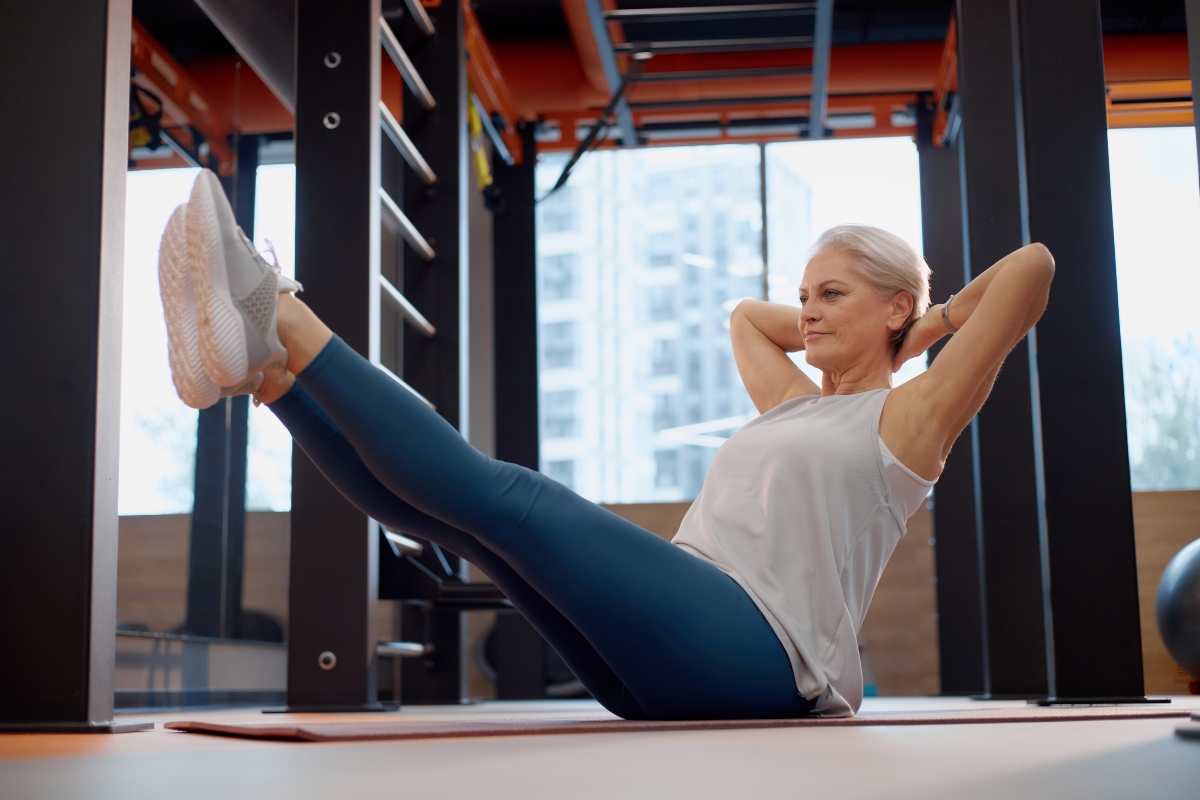
Although it is often associated solely with the abdominal muscles, the core functions as a system that surrounds the trunk.
It includes the abdominal wall, the muscles of the middle and lower back, the diaphragm, and the pelvic floor.
They all work together to stabilize the spine, pelvis, and rib cage, as well as to allow forces to be efficiently transferred throughout the body.
Proper stability is dynamic: it increases when an activity requires more support and decreases when it no longer needs it.
That’s why tightening your abdomen isn’t a bad thing in and of itself.
When lifting heavy objects, for example, it may be necessary to increase the stiffness of the spine.
The problem begins when intense muscle contraction becomes the body’s normal state, even during activities that do not require such a high level of effort.
What happens when you tense your abs too much?
Maintaining maximum abdominal contraction regardless of the activity can turn your core into an excessively rigid structure.
Under these conditions, everyday activities such as walking, turning, or reaching for an object must be performed against this constant tension, which can lead to feelings of stiffness and pain.
Breathing may also be affected.
The diaphragm does more than just help you breathe.
It also functions as a postural muscle and works in coordination with other core muscles, including the pelvic floor and the abdominal wall.
CNN cites a small 2023 study involving 31 healthy adults that found that contracting the abdominal muscles during a lifting task reduced lung volume despite increasing diaphragmatic movement.
This does not mean that you should avoid contracting your abdominal muscles when lifting heavy loads.
The difference lies in using it only when the activity actually requires it, rather than keeping it on all the time.
Breathing is also part of a functional core

Excessive and chronic abdominal tension can lead to shallow breathing or cause a person to hold their breath.
According to Santas, this can intensify the activation of the sympathetic nervous system—which is associated with the fight-or-flight response—and further increase muscle tension.
This can lead to a vicious cycle: increased tension makes it difficult to breathe properly, and that restricted breathing can contribute to maintaining the tension.
A simple way to assess whether you’re properly engaging your core during low-intensity activities is simply to pay attention to your breathing.
If you are unable to breathe deeply and continuously while performing an everyday movement or light exercise, you may need to reduce the intensity or range of motion.
You don’t need the same level of tension to do a plank as you do to lift weights
The stability your body needs for a proper core workout varies depending on the activity.
Carrying grocery bags requires a certain amount of strength and stability, but not the same level of rigidity that might be needed during heavy lifting.
Activities such as mopping, raking leaves, or shoveling snow also require stability, but at the same time, they require the torso to be able to rotate.
The recommendation is to use only as much effort as is necessary for each activity: increase core engagement during the most demanding part of the movement and allow it to decrease when the demand is lower.
It is also important to maintain a balanced alignment of the rib cage over the pelvis to help the muscles work in coordination.
3 Exercises to Build a Stable Core Without Making It Stiff
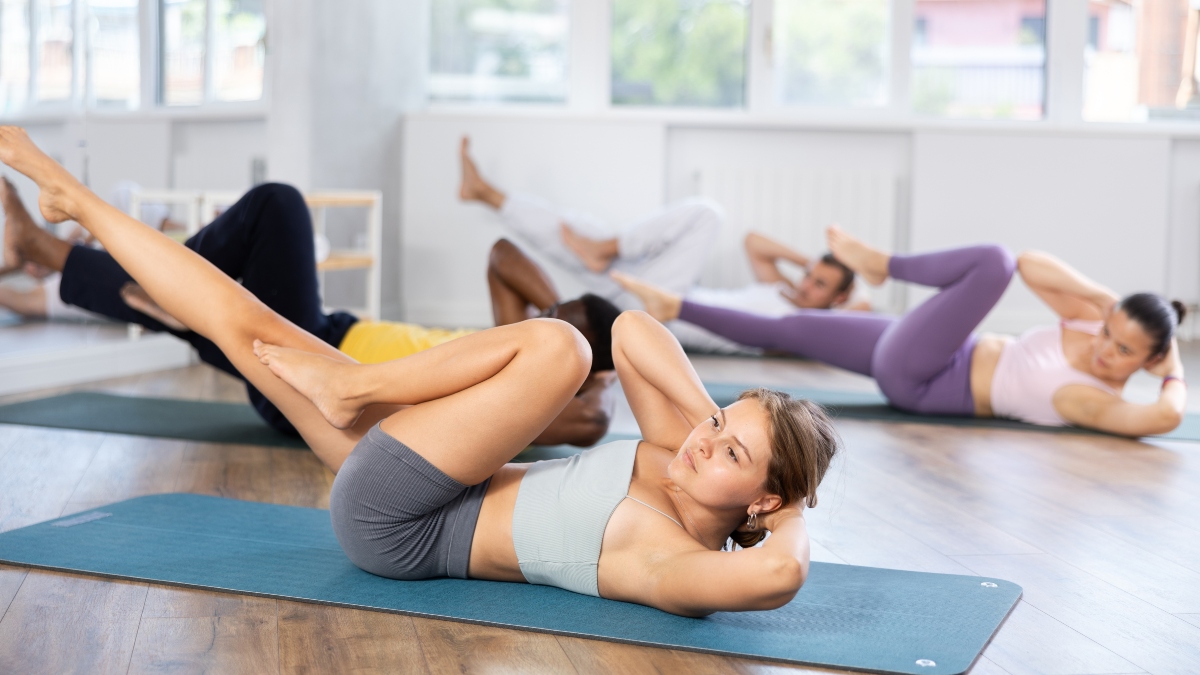
Instead of focusing solely on contracting the abdominal muscles, Santas suggests exercises that teach the core to respond while other parts of the body are in motion.
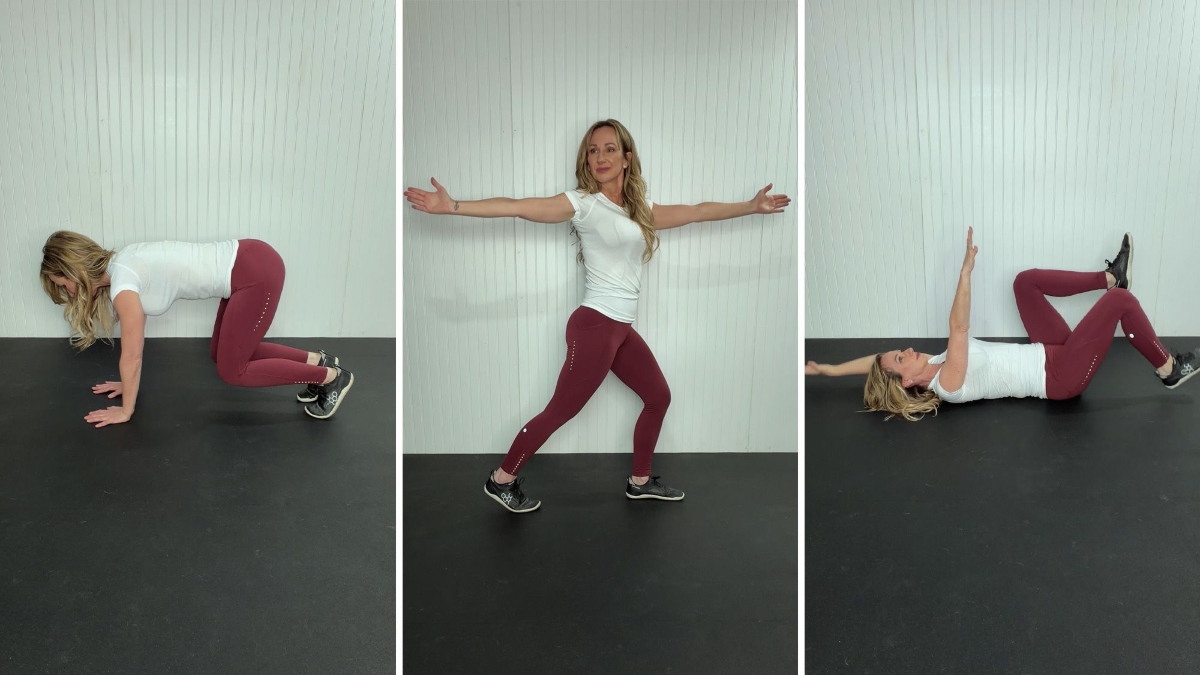
1. Dead bug
Lie on your back with your arms pointing toward the ceiling and your hips and knees bent at 90 degrees.
As you exhale, naturally engage your core while slowly lowering your right arm backward and your left foot toward the floor, keeping your knee bent.
The lower back should not lift off the floor, and the lower ribs should not lift upward either.
Return to the starting position as you inhale, and repeat using the opposite limbs.
The recommendation is to do between 12 and 20 alternating repetitions.
If you find that you’re holding your breath, reduce your range of motion and synchronize it with your breathing again.
2. Bear Side Stretch
Start by getting on your hands and knees, with your wrists directly under your shoulders and your knees directly under your hips.
Lift your knees slightly off the floor.
To move to the right, move your right hand and right foot to the side, and then do the same with your left hand and left foot.
Then he turns around and heads back the other way.
The goal is to keep your hips level and your spine elongated while breathing normally.
You can continue until you’ve completed between 12 and 20 steps on each side.
3. Split-Stance Twist
Stand with one leg forward and the other back, with your feet about 30 to 46 centimeters apart.
With your right foot forward and your knee slightly bent, extend both arms forward at chest level.
Keep your right arm extended forward while you extend your left arm out to the side and turn your torso to the left as you inhale.
Exhale as you return to the center.
Do 8 to 10 repetitions, and then switch the position of your legs to work the other side.
This movement helps train the core’s ability to control rotational forces while the body maintains balance and alignment, a skill that can later be applied to everyday movements such as walking or turning.
Strength doesn’t mean keeping your body stiff
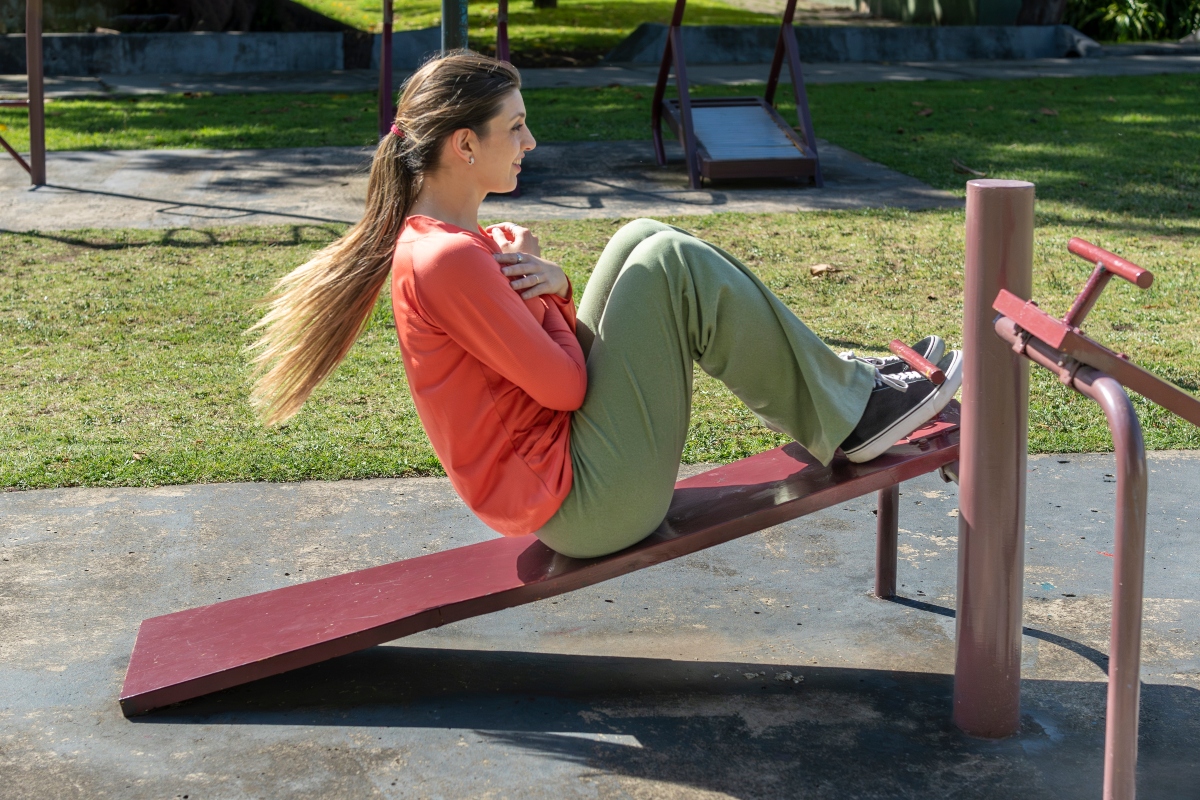
The conclusion is simple: having a strong core doesn’t mean keeping your abs tight all day long.
The body needs to be able to generate tension when an activity requires it, but it also needs to relax, breathe, and move freely when that tension is no longer necessary.
Training this ability to adapt can lead to more efficient movements, greater body control, and less restricted breathing.
The three exercises can be incorporated into a regular routine or performed as a circuit two or three times a week, prioritizing controlled movements over speed.
Before starting this or any new exercise program, CNN recommends consulting a doctor or physical therapist and stopping the activity if you experience pain or shortness of breath.
Filed under: Proper Core Training
Source: CNN