Hispanic Heritage Month: The Force That Transcends Borders and Transforms the U.S.
Por Miriam Gonzalez ·
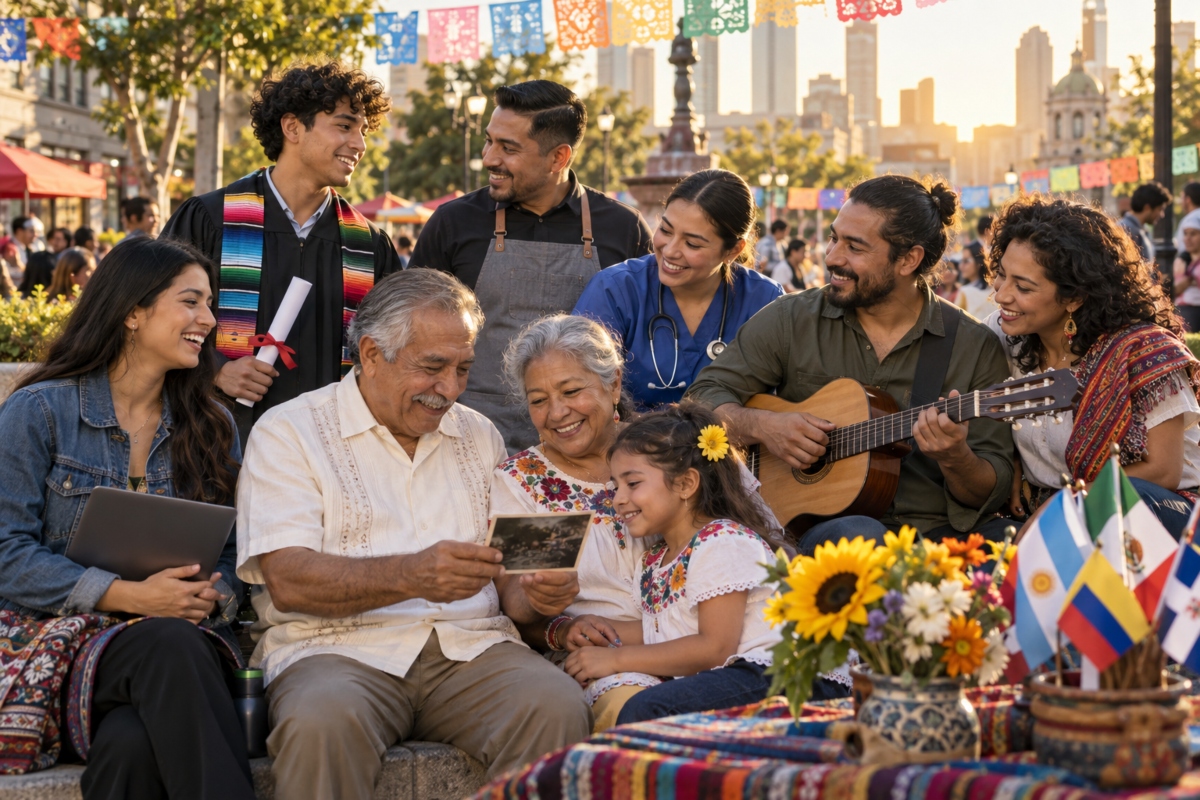
Hispanic Heritage Month typically fills the streets with music, food, parades, and Latin American flags. However, its true significance goes far beyond a cultural celebration. It also represents the history, hard work, and influence of a community that actively contributes to shaping the present and future of the United States.
From the names of cities and states to the food that ends up on our tables, the music that tops the charts, and the businesses that create jobs, the Hispanic presence is an inseparable part of American identity.
It’s not just about remembering where millions of families came from. It’s about recognizing what they have built after crossing borders, preserving their roots, and establishing new lives.
Why is it celebrated over two months?
“The View” kicks off Hispanic and Latin American Heritage Month by honoring the life and legacy of Pura Belpré, the first Puerto Rican librarian in New York City, whose work helped bring Latin stories to generations of young readers. pic.twitter.com/l4CjXQpIdH
— The View (@TheView) September 15, 2026
Hispanic Heritage Month begins on September 15 and ends on October 15.
The choice of dates has historical significance related to the independence of several Latin American countries.
Costa Rica, El Salvador, Guatemala, Honduras, and Nicaragua celebrate their independence on September 15.
Mexico celebrates it on September 16, and Chile on the 18th.
The observance began in 1968 as National Hispanic Heritage Week, after Congress passed a resolution signed by then-President Lyndon B. Johnson.
Twenty years later, Congress extended the celebration to a 31-day period.
The measure was enacted in 1988 by President Ronald Reagan, and the first proclamation designating National Hispanic Heritage Month was issued in 1989 by George H. W. Bush, according to the legislative history compiled by the U.S. Library of Congress.
A Community That Continues to Grow
The Hispanic population in the United States reached approximately 68 million people as of July 1, 2024, according to the most recent data released by the Census Bureau for this observance.
That figure represents about 20% of the total population and makes Hispanics the largest racial or ethnic minority in the country.
In addition, at least 15 states have one million or more Hispanic residents.
These include California, Texas, Florida, New York, Arizona, Illinois, Georgia, Colorado, New Jersey, New Mexico, North Carolina, Pennsylvania, Massachusetts, Virginia, and Washington.
But talking about the Hispanic community as a single group can be misleading.
Within it, people with Mexican, Puerto Rican, Cuban, Dominican, Salvadoran, Guatemalan, Colombian, Venezuelan, and many other national origins live side by side.
Every family has its own unique story, although many share similar experiences related to migration, language, adaptation, and the search for opportunities.
Spanish as a Bridge Between Generations
Whether you call it New York City, Nueva Yol, or PueblaYork, Hispanic and Latino New Yorkers are at the heart of the city we love.
From Luisa Moreno’s labor activism to the marches of the Young Lords in the South Bronx in 1969.
From Juan Rodriguez, a free, mixed-race… pic.twitter.com/b864fcSxhU
— Mayor Zohran Kwame Mamdani (@NYCMayor) September 15, 2026
For millions of families, Spanish is much more than just a means of communication.
It is the language of our grandparents, the songs of our childhood, family recipes, affectionate nicknames, and stories passed down from one generation to the next.
In many households, speaking two languages also reflects an identity that doesn’t have to choose between two worlds.
The children and grandchildren of immigrants can feel completely American without giving up the traditions they have inherited from their families.
This cultural duality is evident on television, the radio, in movies, in advertising, and on social media.
It has also fueled the growth of media outlets, creators, and companies that speak directly to an audience capable of switching between English and Spanish.
A Force Driving the Economy
The importance of the Hispanic community extends beyond its population growth.
Their participation in the labor market, entrepreneurship, and consumption has a significant impact on the U.S. economy.
A report on the Latinx Gross Domestic Product estimated that the economic activity generated by this population reached approximately 4.1 trillion dollars in 2023.
If it were considered the economy of an independent country, it would be comparable in size to the world’s largest economies.
Behind those numbers are small business owners, farmworkers, doctors, teachers, construction workers, scientists, artists, entrepreneurs, and professionals from virtually every industry.
There are also Latina women, whose presence in the labor market and in entrepreneurship continues to grow, although they still face wage inequalities and difficulties in accessing capital, housing, and other opportunities for development.
Music, food, and traditions that are now part of the United States
🇺🇸Hispanic Heritage Month began as Hispanic Heritage Week under President Lyndon B. Johnson in 1968 and was expanded to a month by President Ronald Reagan in 1988 pic.twitter.com/OYc8PWIDTA
— RetroNewsNow (@RetroNewsNow) September 16, 2026
Hispanic cultural influence is inseparable from everyday life in the United States.
Tacos, pupusas, arepas, rice and chicken, tamales, and Cuban coffee have crossed borders and won over very different communities.
The same is true of music.
Genres such as reggaeton, regional Mexican music, salsa, bachata, and merengue have evolved from being forms of expression primarily associated with Latino communities to taking the international stage and topping digital streaming charts.
However, reducing Hispanic heritage to food, dance, and entertainment overlooks an essential part of its significance.
The community has also contributed to science, education, the armed forces, politics, the justice system, social movements, and the defense of civil rights.
Celebrating Means Telling the Whole Story
Hispanic Heritage Month offers an opportunity to celebrate achievements, but also to discuss the challenges that remain.
Representation, access to education, wage disparities, discrimination, and the challenges faced by many immigrant families are all part of a conversation that should not be limited to 31 days.
Recognizing Hispanic heritage means understanding that the histories of these communities do not exist apart from American history. They are part of it.
The younger generations are proving that it is possible to preserve one’s roots while building one’s own identity.
They can speak English and Spanish, celebrate Thanksgiving and make tamales at Christmas, listen to regional music, and excel at universities, in businesses, in laboratories, or in public office.
Heritage does not remain frozen in the past. It evolves, transforms, and takes on new meanings with each generation.
That is why Hispanic Heritage Month transcends borders and a single date on the calendar.
It is a recognition of a diverse community that is not only changing the United States—it has been helping to build it for centuries.
Filed under: Hispanic Heritage Month